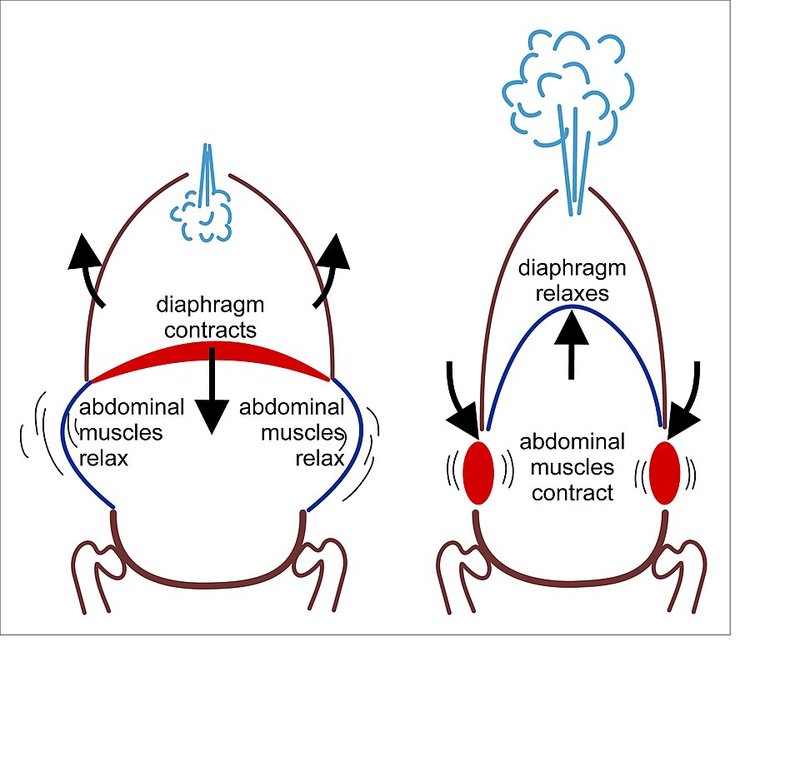
Yes. Accessory muscles of respiration help expand or compress the chest when breathing demand rises, though the diaphragm is the main inspiratory muscle at rest.
According to NCBI StatPearls anatomy of the thoracic muscles, accessory inspiratory helpers include the scalenes (which elevate the first and second ribs) and the sternocleidomastoid (which helps raise the sternum). Other muscles that can assist inspiration or forced expiration include parts of the pectoralis group, serratus anterior, and abdominal wall muscles.
Using accessory muscles during heavy exercise or singing is normal. Seeing them work hard while someone is at rest can be a clinical warning sign of respiratory distress, such as during an asthma flare.