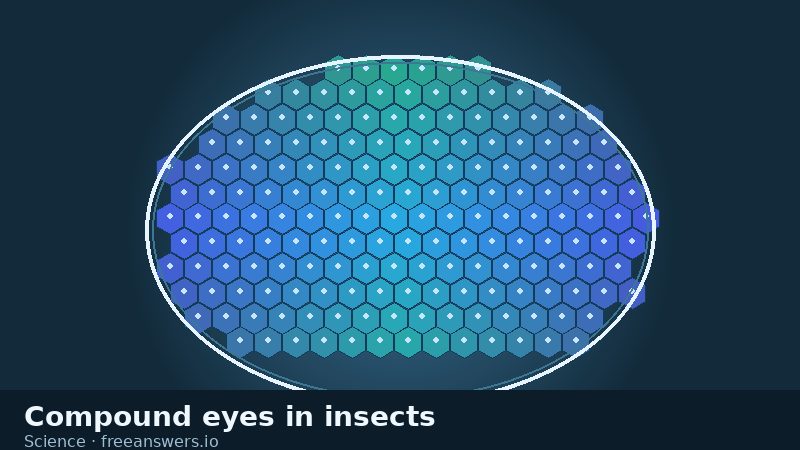
Yes. A pair of compound eyes are the principal visual organs of most insects; they appear in nearly all adults and in many immature stages of ametabolous and hemimetabolous orders. Each compound eye is built from many similar facets called ommatidia—the structural units of vision—whose number ranges from fewer than six in some worker ants to more than 25,000 in some dragonflies.
Together those facets give insects a mosaic-like view that is especially good at detecting motion, though overall visual acuity is generally poorer than in vertebrates. Some insects also have simple eyes (ocelli or stemmata) in addition to, or instead of, compound eyes depending on life stage and species.
Source: Photoreceptors — ENT 425 General Entomology, NC State University