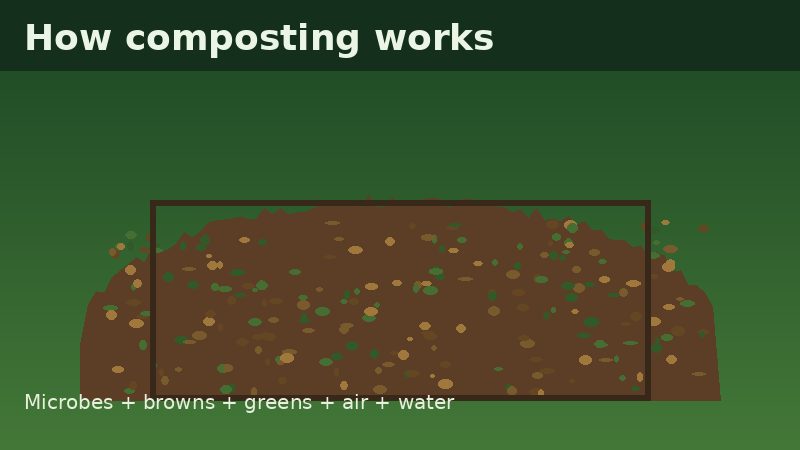
Composting is the managed, aerobic breakdown of organic materials—food scraps, leaves, grass, and woody bits—by microorganisms that need carbon, nitrogen, water, and oxygen. Those microbes turn the pile into dark, crumbly compost that improves soil health and plant growth.
A working pile balances carbon-rich “browns” (dry leaves, cardboard, twigs) with nitrogen-rich “greens” (fruit and vegetable scraps, grass clippings), kept about as damp as a wrung-out sponge and aerated by turning. The EPA says a well-tended backyard pile can finish in about three to five months; a passive pile may take up to a year.
Source: Composting At Home — U.S. Environmental Protection Agency