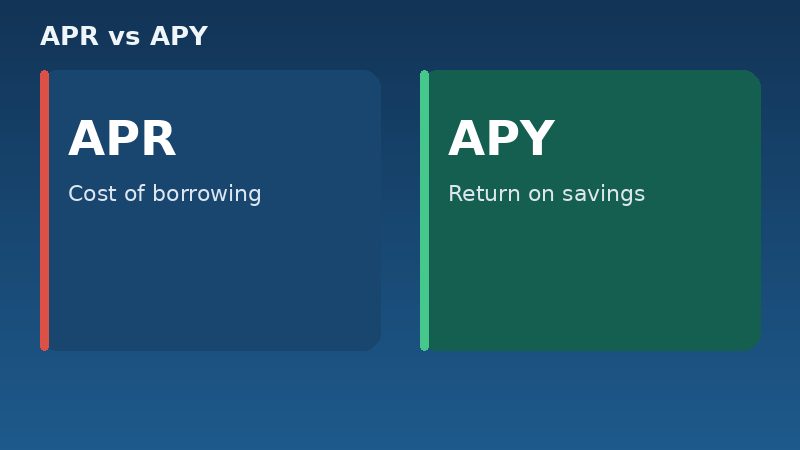
APR (annual percentage rate) measures the yearly cost of borrowing—the interest you pay on loans or credit cards, often plus certain fees such as closing costs. APY (annual percentage yield) measures the yearly interest you earn on deposit products like savings accounts and CDs, and it reflects how compounding boosts that return.
In practice you usually want a lower APR when borrowing and a higher APY when saving. A loan’s APR is often higher than its stated interest rate because fees are folded in; APY on savings is typically a bit higher than the nominal rate because interest compounds over the year.