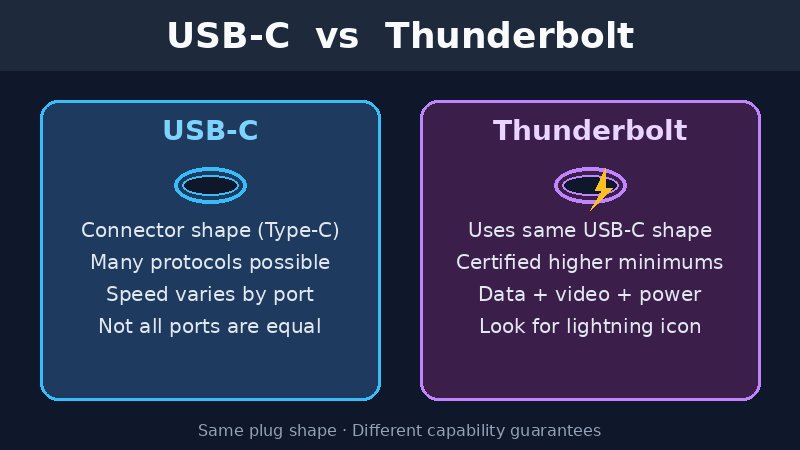
USB-C is primarily a connector shape (the reversible oval plug). A USB-C port can support many different protocols and capability levels—from basic data and charging to faster USB versions—so two ports that look identical can behave very differently.
Thunderbolt is a certified high-performance connectivity standard that also uses the USB-C connector shape. Thunderbolt certification sets higher minimum requirements for bandwidth, display support, power, and reliability than a generic USB-C port. Intel notes that Thunderbolt is “more than a USB-C connector,” and ports are often marked with a lightning-bolt icon.
In short: USB-C describes the plug; Thunderbolt describes a stricter feature set that rides on that plug. Thunderbolt ports can usually fall back to USB behavior with USB-C accessories, but a plain USB-C port does not automatically provide full Thunderbolt performance.