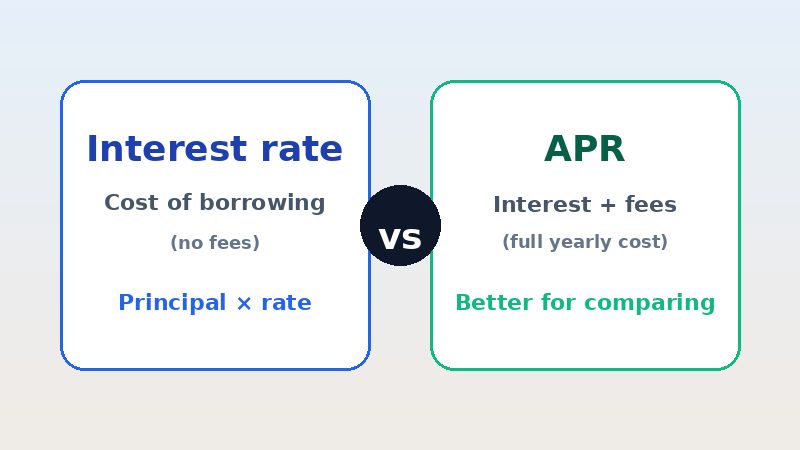
A loan’s interest rate is the percentage you pay the lender for borrowing money—the cost applied to the principal. The annual percentage rate (APR) is a broader measure: it includes that interest rate plus additional lender fees (such as origination charges) expressed as a yearly percentage.
Because APR folds in fees, it usually sits higher than the sticker interest rate and is the better figure for comparing loan offers side by side. Under the Truth in Lending Act, lenders must disclose APR before you finalize many consumer loans; compare APR to APR, not APR to interest rate alone.