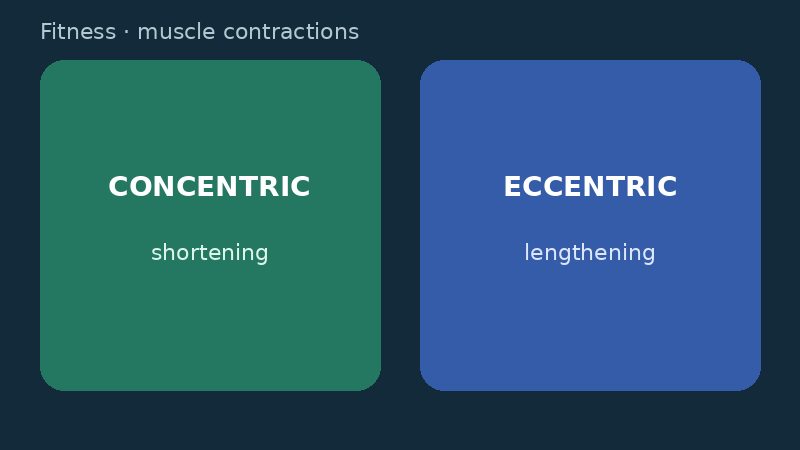
Concentric and eccentric exercise describe opposite phases of muscle work under load. Concentric actions shorten the muscle while it produces force—for example, standing up from a squat, pressing a weight overhead, or curling a dumbbell upward. Eccentric actions lengthen the muscle while it stays under tension—slowly lowering into a squat, controlling the descent of a push-up, or lowering the dumbbell back down.
Most strength moves include both phases. Concentric work emphasizes power and lifting; eccentric work emphasizes control, tendon strength, and often greater mechanical tension during the lowering phase. Training both with intention supports balanced strength gains.
Source: Cleveland Clinic — Eccentric vs. Concentric Movement.