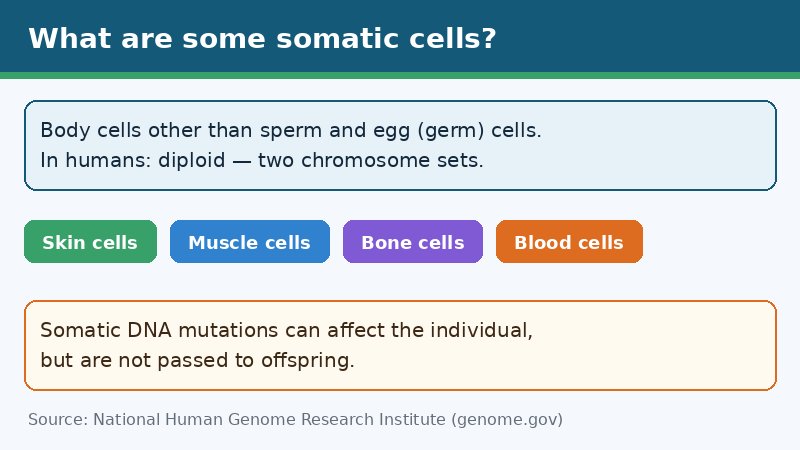
Somatic cells are the cells in the body other than sperm and egg cells (which are called germ cells). Familiar examples include skin, muscle, bone, and blood cells. In humans, somatic cells are diploid: they contain two sets of chromosomes, one inherited from each parent.
DNA mutations that arise in somatic cells can affect the person who carries them, but they are not passed on to offspring. That is different from mutations in germ cells, which can be inherited. The National Human Genome Research Institute defines somatic cells this way in its genetics glossary.
Source: National Human Genome Research Institute — Somatic Cells