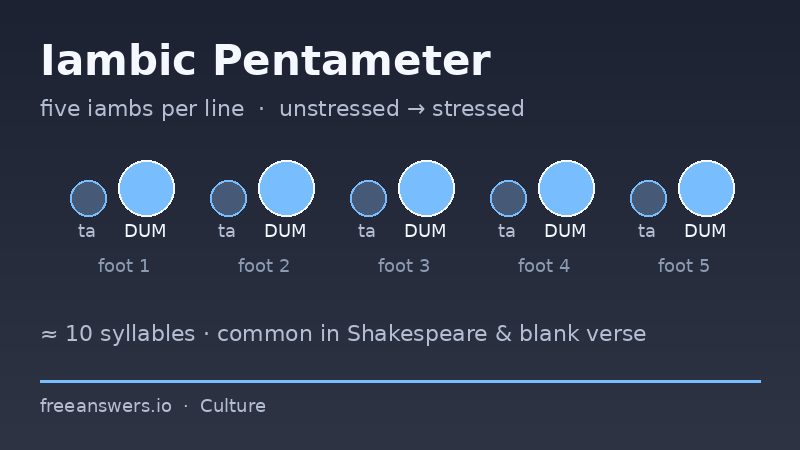
Iambic pentameter is a line of verse made of five iambs—metrical feet that each pair an unstressed syllable with a stressed one (ta-DUM). A typical line therefore has about ten syllables and the rising rhythm ta-DUM ta-DUM ta-DUM ta-DUM ta-DUM.
It has been a core meter of English poetry since Geoffrey Chaucer in the fourteenth century and is the backbone of Shakespeare’s plays and sonnets, Milton’s Paradise Lost, and much blank verse (unrhymed iambic pentameter). Poets often vary the pattern with feminine endings or an occasional trochee, but the five-iamb frame remains the reference point.