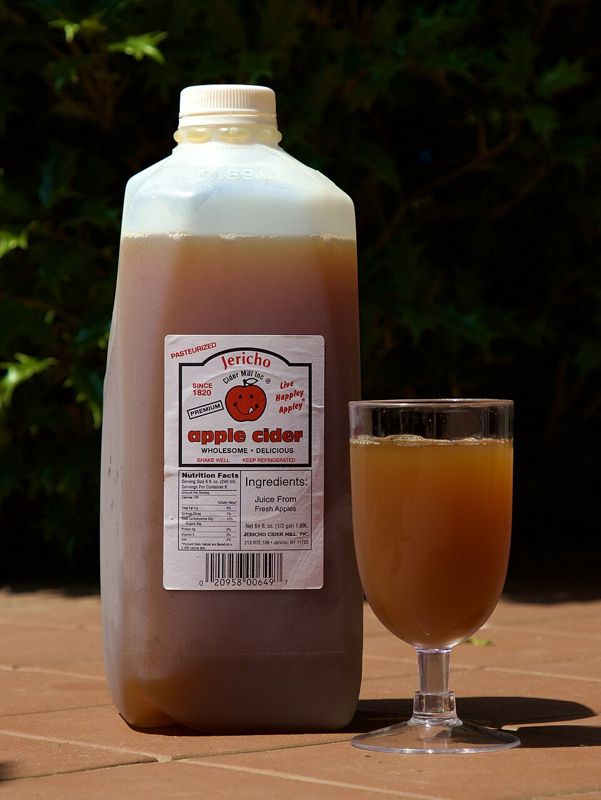
In the United States, apple cider and apple juice both start as the liquid pressed from chopped, mashed apples. Apple juice goes through extra steps: it is filtered to remove pulp and sediment, pasteurized, often given a preservative such as potassium sorbate to prevent fermentation, and sometimes sweetened with sugar or corn syrup.
Because cider is left unfiltered, it is cloudy and has a tarter, more complex flavor, and it is more acidic (lower pH) than apple juice. Most cider sold today is pasteurized, but unpasteurized cider is also available and spoils faster, so it must be kept refrigerated. For cooking, America’s Test Kitchen found that apple juice is not a good substitute for cider because dishes turn out too sweet. Outside North America, “cider” usually means the fermented, alcoholic drink that Americans call hard cider.
Source: America’s Test Kitchen: Apple Cider versus Apple Juice
Image: Apple cider from New York, by Hayden Soloviev, CC BY 4.0, via Wikimedia Commons.