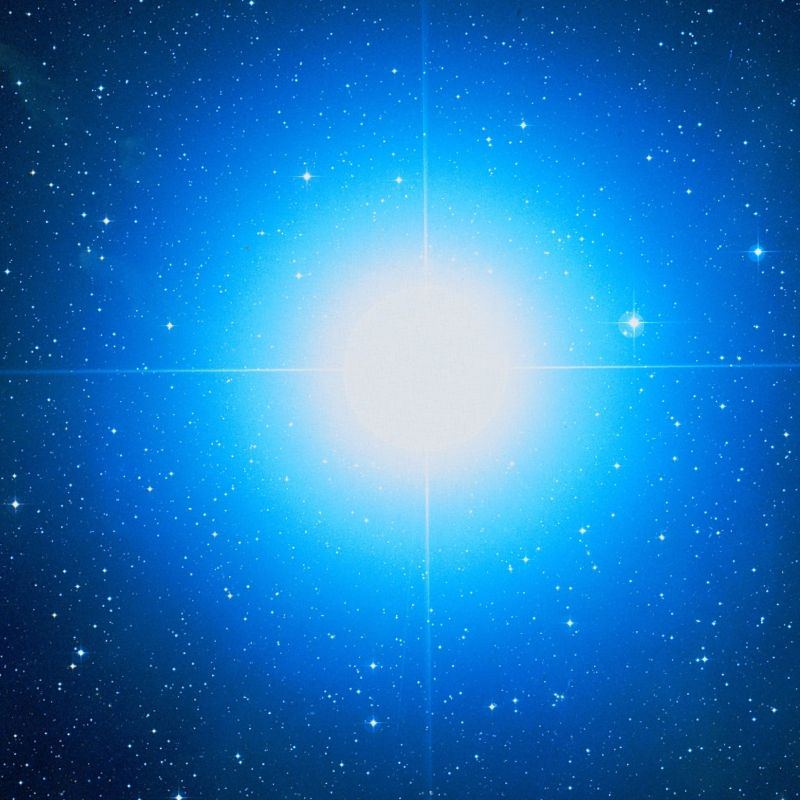
Blue supergiants are massive, very hot, and extremely bright stars. Astronomers at the Instituto de Astrofísica de Canarias (IAC) describe them as stars with more than about 8 times the Sun’s mass that are in an intermediate stage of their lives, after they finish burning hydrogen in their cores as ordinary main-sequence stars. Their high surface temperatures make them shine blue-white, and they give off many thousands of times more light than the Sun. Rigel, the bright star at the foot of Orion, is the best-known example.
This phase is short and unstable, and it shapes how the star ends its life. Stars like these later explode as supernovae and leave behind neutron stars or black holes, and while they live they enrich their galaxies with elements heavier than hydrogen and helium. In 2023 an IAC and University of La Laguna team published a study of roughly 750 blue supergiants within about 6,500 light-years of Earth, the largest sample of its kind so far.
Source: Instituto de Astrofísica de Canarias: Blue Supergiants observed in detail
Image: Rigel, Rutherfurd Observatory, by Haktarfone, CC BY-SA 3.0, via Wikimedia Commons.