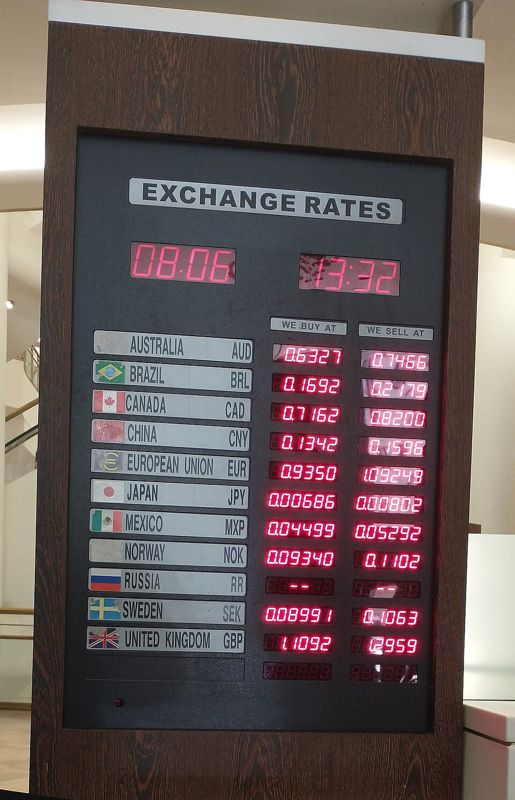
For most major currencies, exchange rates are set by supply and demand in the foreign exchange market, so the price of one currency in terms of another changes constantly as people, companies, and investors buy and sell. Investopedia (updated February 2026) lists the main forces behind those moves: differences in inflation (lower inflation tends to strengthen a currency), differences in interest rates (higher rates attract foreign capital and tend to lift a currency), the current account balance, the size of public debt, and the terms of trade, meaning export prices compared with import prices.
Political and economic stability also matter, because investors move money toward countries they see as lower risk. Some governments do not let the market decide freely and instead peg or manage their currency against a benchmark such as the U.S. dollar or the euro, with the central bank buying or selling to hold the rate near its target.
Source: Investopedia: 5 Factors That Influence Exchange Rates
Image: Exchange rates sign, by Dvortygirl, CC BY-SA 4.0, via Wikimedia Commons.