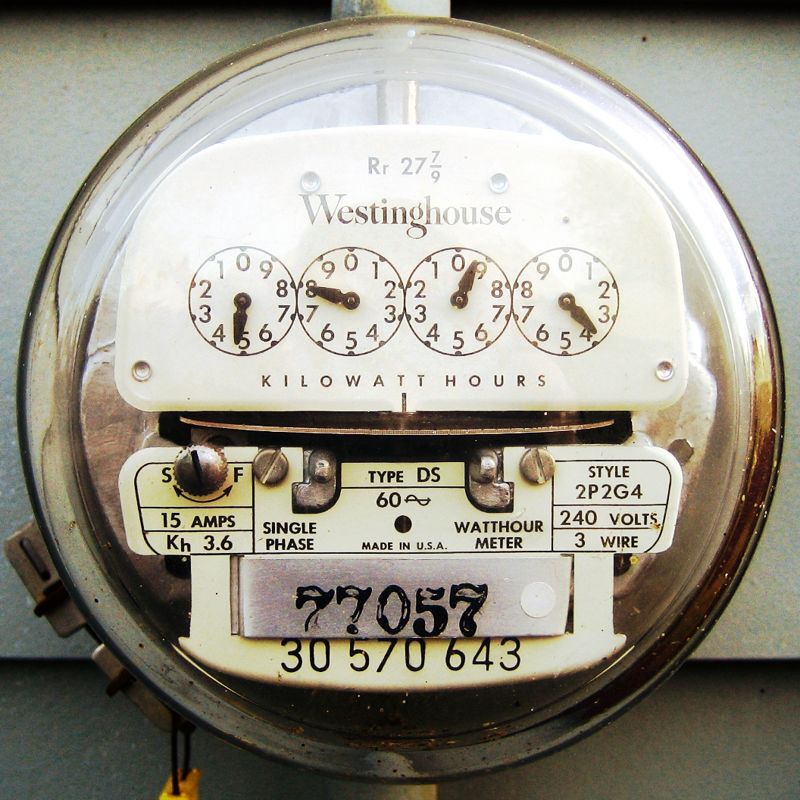
A carbon footprint is calculated by multiplying activity data, such as kilowatt-hours of electricity used or litres of fuel burned, by a matching emissions factor (for example, kilograms of CO2 per litre of fuel), then adding up the results for every emission source. Governments usually publish updated emissions factors each year.
The total is expressed in carbon dioxide equivalent (CO2e), a unit that lets different greenhouse gases be compared on a like-for-like basis with CO2. For an organization, the sources are usually grouped into Scope 1 (direct emissions such as onsite fuel and company vehicles), Scope 2 (purchased electricity and energy), and Scope 3 (other indirect emissions outside its direct control, such as purchased goods, business travel, and employee commuting). Product footprints add up the emissions from each stage of the product’s life cycle in the same way.
Source: The Carbon Trust, “A guide to carbon footprinting for businesses”.
Image: House Meter, photo by Brian Cassidy (CC BY 2.0), via Wikimedia Commons.