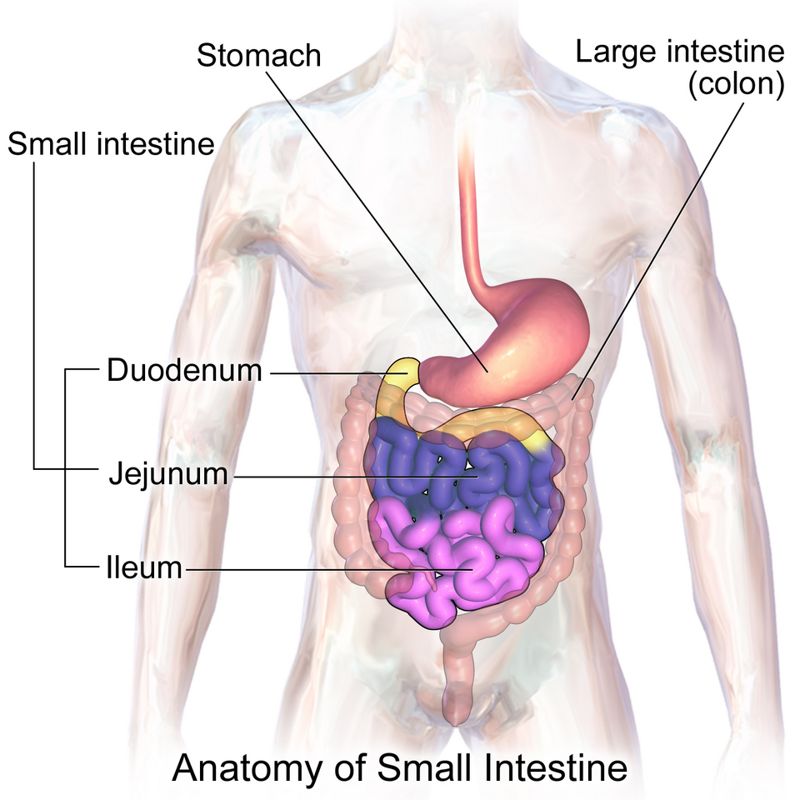
The intestines finish digesting food, absorb its nutrients and water, and turn what is left into stool. According to Cleveland Clinic, the small intestine, which connects the stomach to the large intestine and is about 22 feet long, mixes food with digestive juices, enzymes and bile, then absorbs nutrients and water through the villi in its lining. More than 90% of the nutrients and water the body gets from food come from the digestive process the small intestine drives.
The large intestine (the cecum, colon, rectum and anus) receives the liquid waste left over after the small intestine has done its work. It absorbs water and salts from that waste, turns it into solid stool, and uses layers of muscle to move the stool out of the body.
Sources: Cleveland Clinic: Small Intestine; Cleveland Clinic: Large Intestine & Colon
Image: Anatomy of the small intestine by BruceBlaus (Blausen Medical), CC BY 3.0, via Wikimedia Commons.