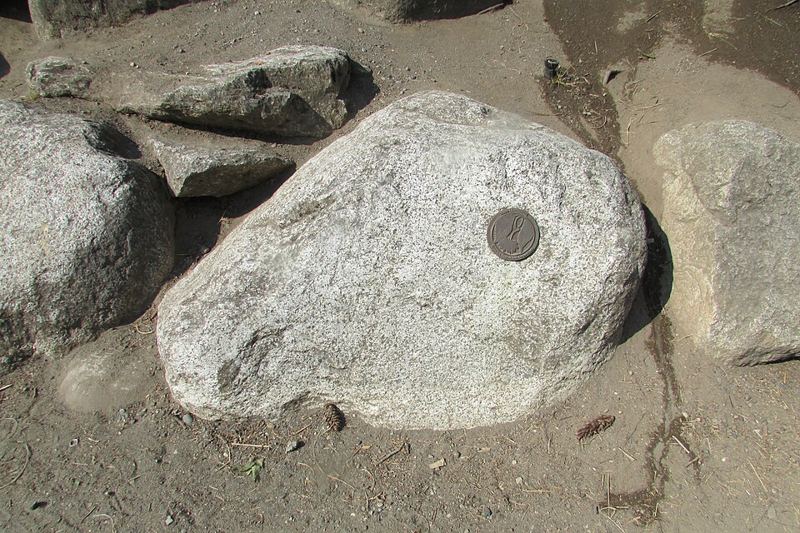
Granitic rocks are granite and its close relatives: light-colored, coarse- to medium-grained igneous rocks made mostly of quartz and feldspar. They form when silica-rich magma cools slowly deep underground, which gives the crystals time to grow large enough to see, and granite is the most common of these deep-seated (plutonic) rocks in Earth’s crust.
Besides quartz and both alkali and plagioclase feldspar, granitic rocks usually contain smaller amounts of dark minerals such as biotite, muscovite, amphibole or pyroxene, which create the familiar speckled look. Geologists generally do not call a rock granite if it has less than about 20 percent quartz or more than about 20 percent dark minerals. Granitic rock can form thin dikes and sills or huge bodies called batholiths, and it is quarried for building stone, highway curbing, building facades and tombstones.
Source: Granite, Encyclopaedia Britannica
Image: granite with biotite, feldspar and quartz by Chris Light, CC BY-SA 4.0, via Wikimedia Commons.