A freeze warning is the more serious alert. The National Weather Service issues a freeze warning when temperatures are forecast to drop below 32°F for an extended period, cold enough to kill some commercial crops and garden plants (an extended stretch below 28°F can kill most of them). A frost advisory is a lower-level alert meaning areas of frost are expected or already forming, which threatens sensitive vegetation even if the air does not stay below freezing. A freeze watch sits in between: it signals a potential for significant, widespread freezing temperatures in the next 24 to 36 hours, and these frost and freeze alerts are issued in autumn until the growing season ends and again in spring when it starts.
Source: National Weather Service, “Winter Weather Warnings, Watches and Advisories”
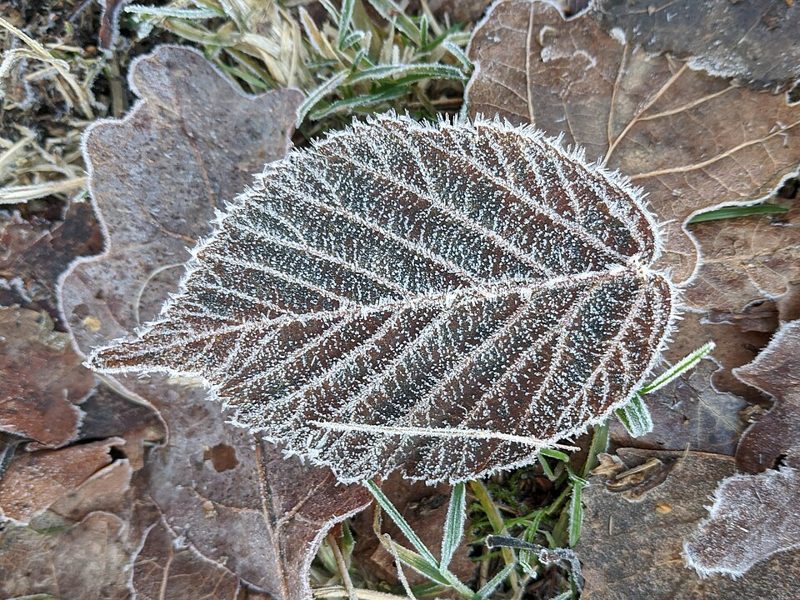
Image: Leaf with frost (photo by Tord Dellsen, CC0), via Wikimedia Commons.