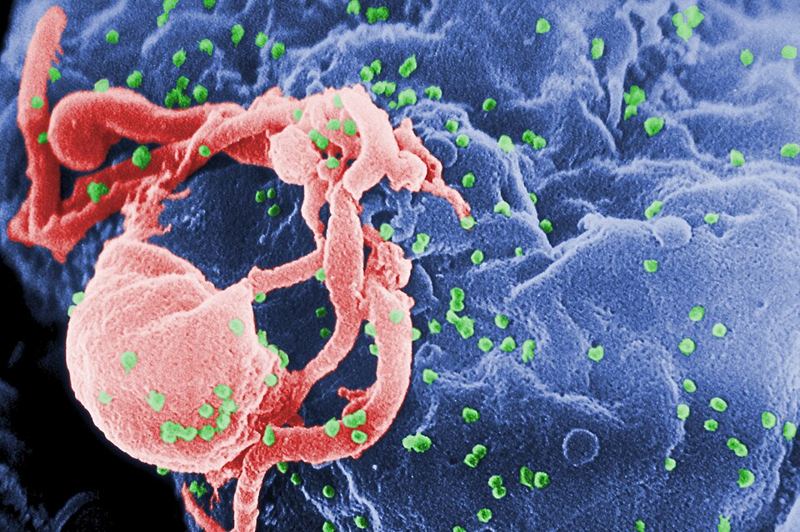
HIV and AIDS are both caused by the human immunodeficiency virus (HIV). HIV attacks cells that help the body fight infection, which leaves a person more vulnerable to other infections and diseases. It spreads through contact with certain bodily fluids of a person who has HIV, most commonly during sex without a condom or HIV prevention medicine, or by sharing injection drug equipment.
AIDS (acquired immunodeficiency syndrome) is not a separate infection; it is the late stage of untreated HIV, when the immune system is badly damaged. According to HIV.gov, a person is considered to have AIDS when their CD4 cell count falls below 200 cells per cubic millimeter of blood or when they develop certain opportunistic infections. There is no cure for HIV, but antiretroviral therapy (ART) taken as prescribed can suppress the virus, prevent progression to AIDS, and keep it from being transmitted to partners through sex.
Source: HIV.gov, What Are HIV and AIDS?
Image: HIV-1 budding from a cultured lymphocyte (colorized scanning electron micrograph), CDC / C. Goldsmith, P. Feorino, E. L. Palmer, W. R. McManus, public domain, via Wikimedia Commons.