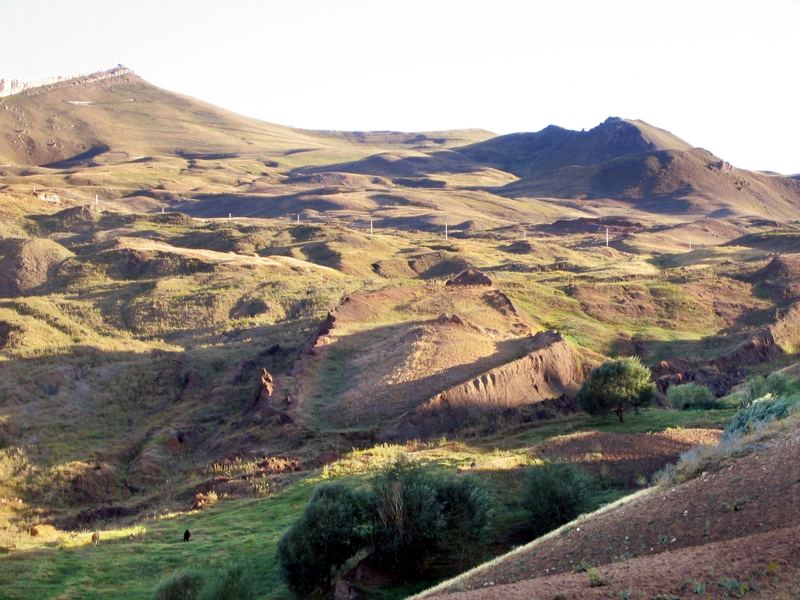
No. Geologists who have examined the Durupınar formation, a boat-shaped mound near Doğubayazıt in eastern Turkey about 27 kilometers (17 miles) southwest of Mount Ararat, have concluded it is a natural rock structure, not the fossilized remains of Noah’s Ark. Retired California State University Northridge geology professor Lorence G. Collins found that the supposed “petrified wood” is actually basalt, the supposed iron washers, rivets and brackets are cemented grains of the mineral magnetite, and the stones labeled as “anchors” are rock that occurs naturally in the area. Earlier investigators who dynamited the side of the site in search of petrified wood also found none and judged it a natural geologic structure. The site’s roughly 515-foot (157-meter) length, close to the Bible’s 300 cubits, is the main reason the claim persists, and new radar scans and drilling at the site in 2026 have revived public interest in it.
Source: Lorence G. Collins, “Noah’s Ark near Dogubayazit, Turkey?” (California State University Northridge)
Image: The Durupınar formation near Doğubayazıt, Turkey. Mfikretyilmaz via Wikimedia Commons, CC BY 3.0.