Anendophasia is the name researchers Johanne Nedergaard of the University of Copenhagen and Gary Lupyan of the University of Wisconsin–Madison proposed in 2024 for a lack of inner speech, meaning the experience of thinking in words as an ongoing inner voice. Not everyone has that inner voice: the University of Copenhagen estimates that 5 to 10 percent of people do not experience one in the usual way, and some describe thinking in pictures or as words without sound instead. In their study of almost 100 adults, published in the journal Psychological Science, people with little inner speech were significantly worse at remembering lists of similar-sounding words and at judging whether pictured objects rhyme, but did no worse at switching between tasks or telling similar shapes apart. The researchers say these differences are unlikely to be noticed in everyday conversation, and it is not yet known whether lacking an inner voice has other practical effects.
Source: University of Copenhagen — People without an inner voice have poorer verbal memory
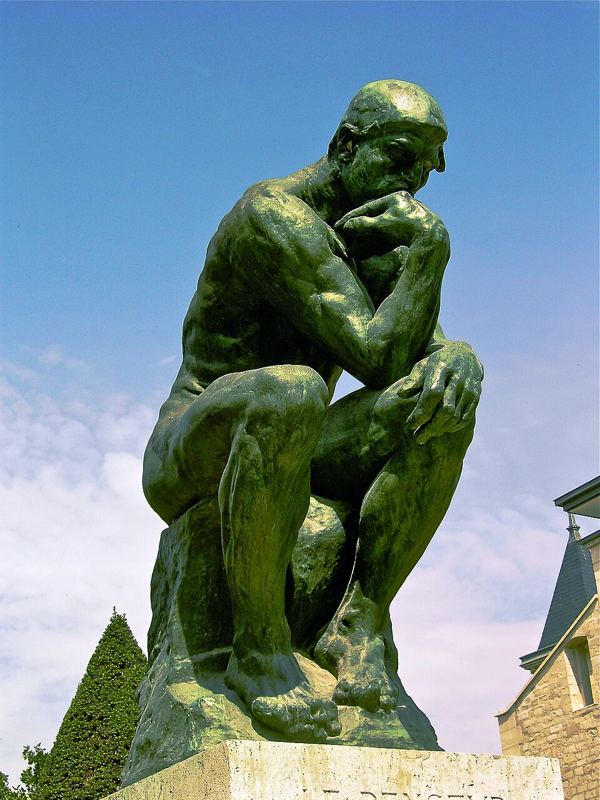
Image: The Thinker by Auguste Rodin at the Musée Rodin, Paris. AndrewHorne via Wikimedia Commons, public domain.