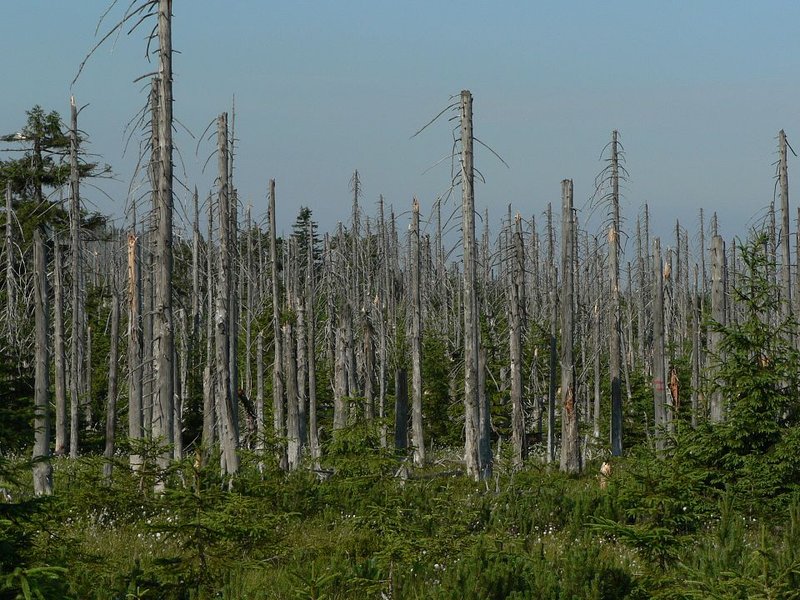
According to the U.S. Environmental Protection Agency, acid rain forms when sulfur dioxide (SO2) and nitrogen oxides (NOX) are released into the air, react with water, oxygen, and other chemicals to make sulfuric and nitric acids, and then fall as wet or dry deposition.
EPA lists three major human sources of those pollutants: burning fossil fuels to generate electricity (especially coal-fired power plants), vehicles and heavy equipment, and manufacturing, oil refineries, and other industries. A smaller share also comes from natural sources such as volcanoes.
Source: U.S. EPA: What is Acid Rain?
Image: Effects of acid rain in the woods, Jizera Mountains, Czech Republic, Lovecz, public domain, via Wikimedia Commons.