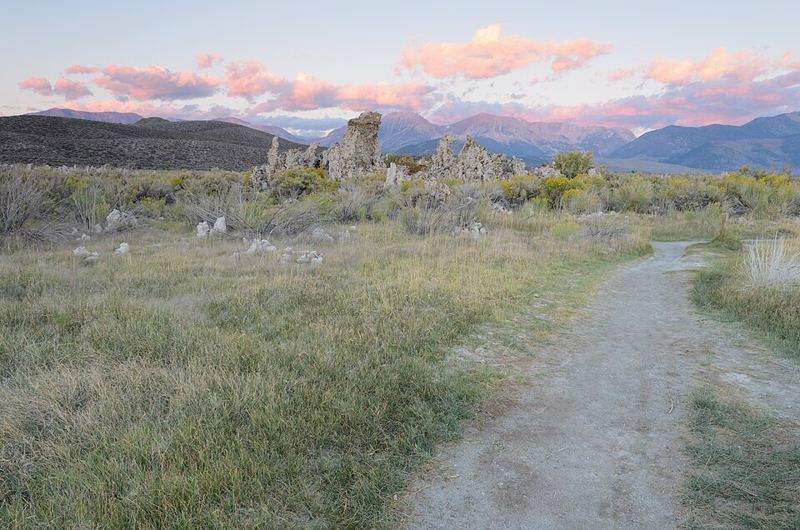
Tufa towers are columns of calcium carbonate (a form of limestone) that build up underwater where calcium-rich spring water seeps up from a lake bottom and mixes with carbonate-rich lake water. The chemical reaction makes calcium carbonate settle out as solid rock around the spring, and over decades to centuries it can grow into a tower more than 30 feet tall.
The best-known examples stand along the shore of Mono Lake in California. They are visible there because the lake level dropped sharply after water diversions to Los Angeles began in 1941. Once a tower is above the waterline it stops growing and slowly erodes, which is why the formations are protected in the Mono Lake Tufa State Natural Reserve.
Source: Mono Lake Committee: Tufa
Image: Tufa towers at South Tufa, Mono Lake, King of Hearts, CC BY-SA 3.0, via Wikimedia Commons.
Related answers
- Is Oumuamua still debated among top scientists?
- What are the winter 2026/2027 snowfall predictions?
- Did a microalgae bloom shut down Israel’s desalination plants?