
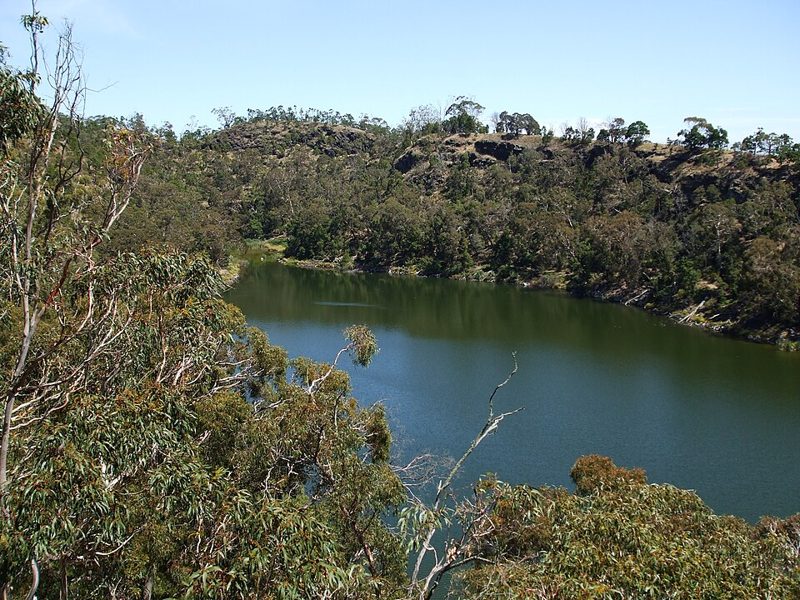
Yes. Aboriginal Australians built lasting structures, and one of the oldest known examples is the stone eel-farming system at Budj Bim in south-eastern Australia, built by the Gunditjmara people.
Over a period of at least 6,600 years, the Gunditjmara used the area’s abundant volcanic rock to build channels, weirs and dams. These works redirected and managed waterways and wetlands so people could trap, store and harvest kooyang, the short-finned eel. UNESCO describes it as one of the world’s most extensive and oldest aquaculture systems, and it gave Gunditjmara society an economic and social base for six millennia. The Budj Bim Cultural Landscape, which covers 9,935 hectares in three separate parts in Victoria, was added to the World Heritage List in 2019. Its stone-walled eel facilities are still recognisable across the wetlands, Gunditjmara Elders continue to pass down the practices tied to them, and the whole landscape is Aboriginal-owned or managed.
Source: UNESCO World Heritage Centre, Budj Bim Cultural Landscape
Image: Budj Bim, Mt Eccles National Park, Victoria, Dhx1, CC0, via Wikimedia Commons.