
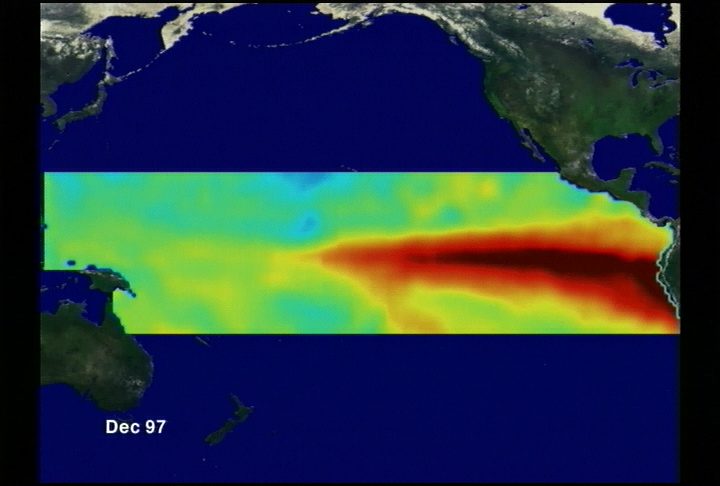
El Niño and La Niña can usually be forecast with confidence about six months ahead, but a new study shows some events can be predicted up to a year in advance, depending on the state of the Pacific when the forecast starts.
Scientists at Australia’s CSIRO and the University of Melbourne analyzed more than 7,500 historical forecasts of the El Niño–Southern Oscillation (ENSO) from climate models developed in nine countries. They found that one-year forecasts started during La Niña conditions performed well in all nine models, while forecasts started from neutral conditions were far less reliable. ENSO events typically peak around December and shape weather patterns worldwide, so earlier warnings could give communities more time to prepare for droughts and floods. The study, led by Nandini Ramesh of CSIRO with co-author Mandy Freund of the University of Melbourne, was published in Science Advances in October 2026. The authors also suggest machine learning and statistical models may help when forecasts begin from neutral conditions. They caution that more work is needed before forecasting agencies can use the approach in practice.
Image: El Niño sea surface temperature anomaly, December 1997, NASA Scientific Visualization Studio (Greg Shirah, Antonio Busalacchi), public domain, via Wikimedia Commons.