
A trademark protects a brand identifier, such as a word, phrase, or design that tells customers who makes a product or service, while a patent protects a technical invention.
The U.S. Patent and Trademark Office (USPTO), which grants patents and registers trademarks, says a trademark identifies your goods or services, distinguishes them from others, and indicates their source. Its example is Coca-Cola for soft drinks. A patent covers technical inventions that are new, unique, and usable in some type of industry, such as pharmaceutical drug compositions, complex machinery, or machine designs; the USPTO’s example is a new type of hybrid engine. The protection works differently, too. Federal trademark registration helps stop others from registering your mark or using a similar one on related goods or services, while a patent stops others from copying, making, using, or selling the invention without the inventor’s consent. Copyright, a third type of intellectual property, covers original creative works such as novels, music, and software code, and it is registered by the U.S. Copyright Office at the Library of Congress rather than the USPTO.
Source: USPTO, Trademark, patent, or copyright
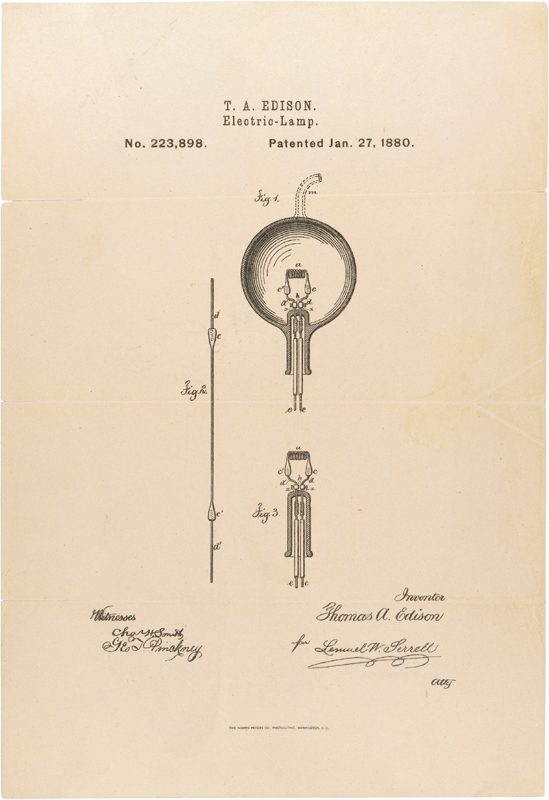
Image: Thomas Edison’s electric lamp patent drawing (1880), public domain, via Wikimedia Commons.