
Yes, you can overdraw a checking account with a debit card, but at a U.S. bank or credit union you can be charged an overdraft fee on ATM withdrawals and most one-time debit card purchases only if you have opted in to overdraft coverage.
An overdraft happens when your account lacks the money for a transaction and the bank pays it anyway. If you opt in to debit card and ATM overdraft, purchases and withdrawals usually go through even when funds are short, and you generally pay a fee on transactions that settle against a negative balance. If you have not opted in, those debit card purchases and ATM withdrawals are generally declined when the money is not there, and you will not be charged an overdraft fee even if a transaction approved with enough funds later settles into a negative balance. The opt-in rule does not cover checks or ACH payments such as online bill pay, so those can still trigger overdraft fees either way. The CFPB found that opted-in accounts had seven times as many overdraft fees as accounts that were not opted in. You can avoid these fees by not opting in, or by opting out if you already did.
Source: Consumer Financial Protection Bureau, Understanding the Overdraft Opt-in Choice
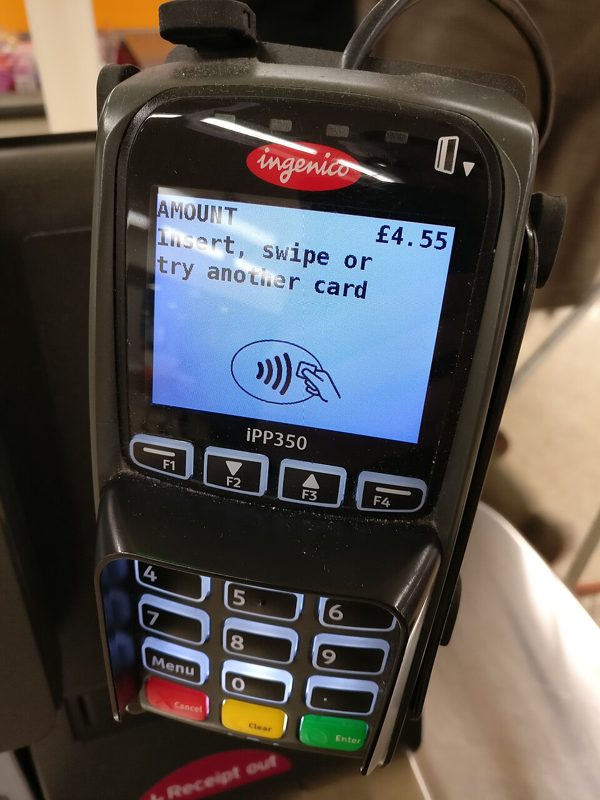
Image: Ingenico iPP350 payment terminal, Daylon124, CC0, via Wikimedia Commons.