
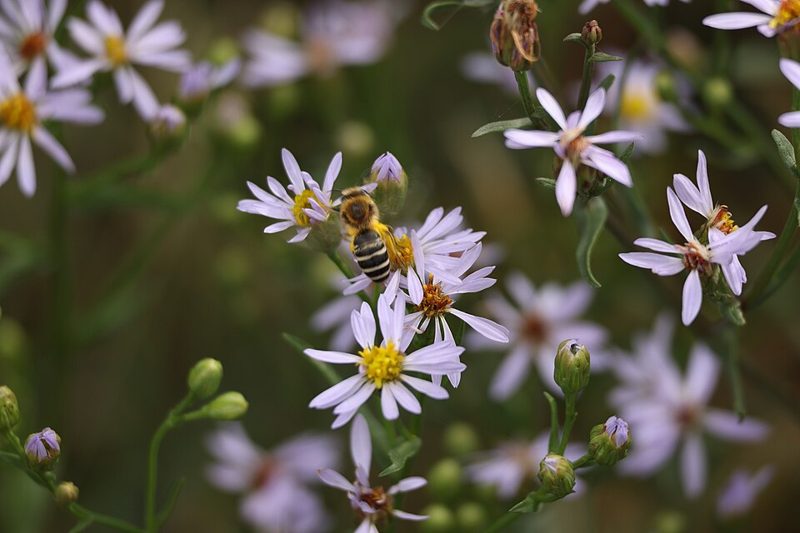
The rare sea aster mining bee, a tiny zebra-striped bee, was spotted at the Wildfowl and Wetlands Trust’s Steart Marshes reserve in Somerset, England, well west of its usual range along England’s south and east coasts.
Naturalist Nigel Phillips made the find, reported by the BBC on October 27, 2026, and called it “a huge surprise.” He found many of the bees and several colonial nest areas in dry, sandy ground, though he had thought they lived only in saltmarshes around the Thames estuary. The bee is a picky feeder that relies on sea aster, a pink and yellow flower that blooms on coastal marshes as summer turns to autumn. Steart Marshes was converted from farmland into a coastal wetland in a restoration project completed in 2014, which let seawater flow back across the fields, and it now supports plenty of sea aster. The trust says the discovery shows rare species can thrive when coastal habitats are restored. Of 290 invertebrate species found in UK saltmarsh habitats, 148 live only in saltmarshes.
Source: BBC News, “Tiny zebra-striped bee sighting a ‘huge surprise’” (October 27, 2026)
Image: Sea aster mining bee in Lincolnshire, England. Jerry Lanfear, CC BY 4.0, via Wikimedia Commons.