RYZ101 is an experimental cancer drug from RayzeBio, a Bristol Myers Squibb company, that attaches the radioactive isotope actinium-225 to DOTATATE, a molecule that seeks out somatostatin receptors on certain tumor cells, so it can deliver short-range alpha radiation that damages the cancer cells’ DNA. On October 12, 2026, Bristol Myers Squibb said a planned interim analysis of its Phase 3 ACTION-1 trial met its main goal: in patients with somatostatin receptor-positive gastroenteropancreatic neuroendocrine tumors (GEP-NETs) whose cancer had progressed after lutetium-177 therapy, RYZ101 produced a statistically significant and clinically meaningful improvement in progression-free survival compared with standard treatments such as everolimus or sunitinib, with safety consistent with what was already known. The company says these are the first Phase 3 results for any alpha-emitting targeted radiopharmaceutical, but it has not yet released the detailed numbers, which it plans to present at a future medical meeting. RYZ101 is not approved; the FDA gave it Orphan Drug Designation in August 2026, and the company plans to discuss a regulatory submission with the agency.
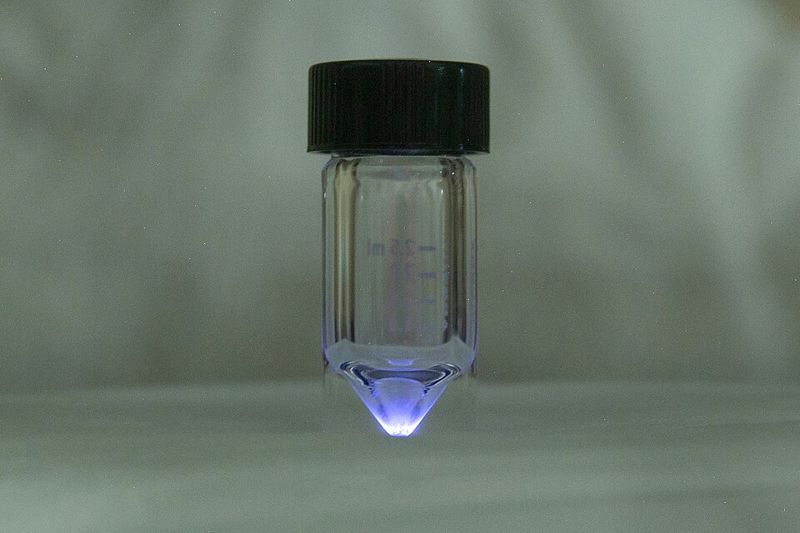
Image: Actinium-225 nitrate at Oak Ridge National Laboratory. Photo by Dr Andrew R. Burgoyne via Wikimedia Commons, CC BY-SA 4.0.
3_at_ORNL_by_Dr_Andrew_R_Burgoyne.jpg)