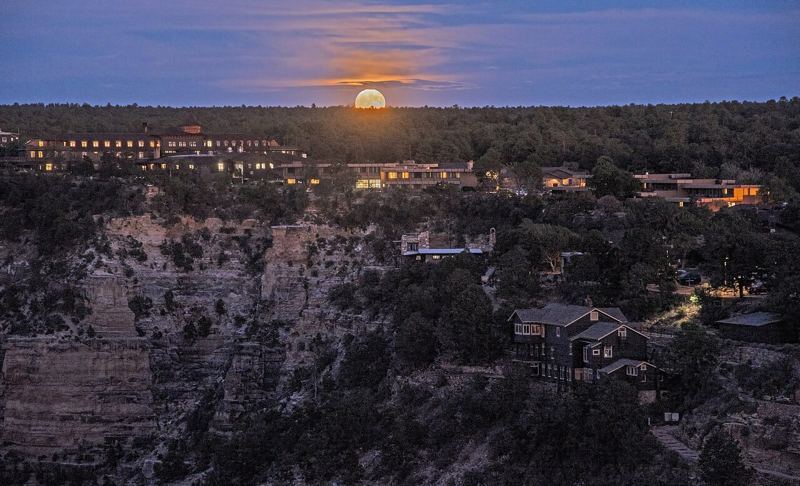
The moon is not actually any bigger when it sits near the horizon. NASA notes that photographs taken with the same zoom setting show the moon is the same width low in the sky as it is high overhead, so the enlarged look is an illusion created by how the brain processes what the eyes see. It is known as the moon illusion.
Scientists still lack a settled explanation. Leading ideas involve how the brain judges the size of near and distant objects and how far away it expects things near the horizon to be; foreground trees, hills, and buildings may also play a part, similar to the Ponzo illusion, in which two equal bars look different in size between converging lines.
You can check it yourself: hold out your index finger and the moon will be about the size of your fingernail whether it is low or high, or view it through a paper tube. The one real difference is color, since moonlight passing through more of the atmosphere near the horizon loses bluer light and looks more yellow or orange.
Source: NASA Science, “The Moon Illusion: Why Does the Moon Look So Big Sometimes?” (last updated February 13, 2025).
Image: Full moon rising over Grand Canyon Village, South Rim, photo by Grand Canyon National Park (NPS), public domain, via Wikimedia Commons.