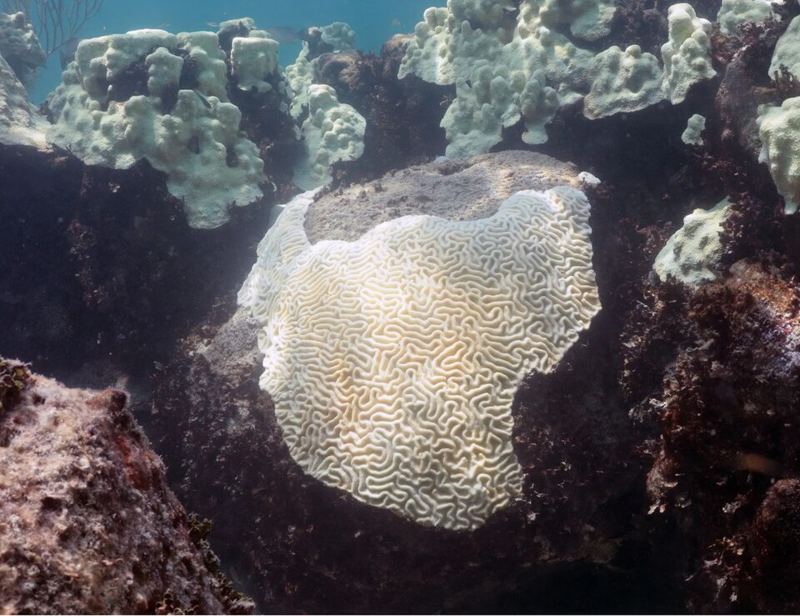
Yes, sometimes. According to NOAA, a bleached coral is not dead: bleaching happens when stress such as unusually warm water causes corals to expel the symbiotic algae (zooxanthellae) that live in their tissues and supply most of their food, leaving them white. If the stress is not severe and conditions return to normal, corals can regain their algae and recover; if the algae loss is prolonged and the stress continues, the coral eventually dies. On reefs, recovery usually takes months or longer, because corals must reabsorb free-floating algae from the water.
The question was in the news in October 2026 after two laboratory studies, reported by Science on October 14, found that bleached coral fragments placed in contact with healthy fragments could take in algae through a tissue bridge. In a Stanford experiment, fragments touching healthy pieces from the same colony fully recovered within eight weeks, though researchers caution that the method is not yet practical for wild reefs.
Source: NOAA National Ocean Service, “What is coral bleaching?”.
Image: Bleached brain coral in the Florida Keys during the 2023 marine heat wave. Credit: NOAA, public domain, via Wikimedia Commons.