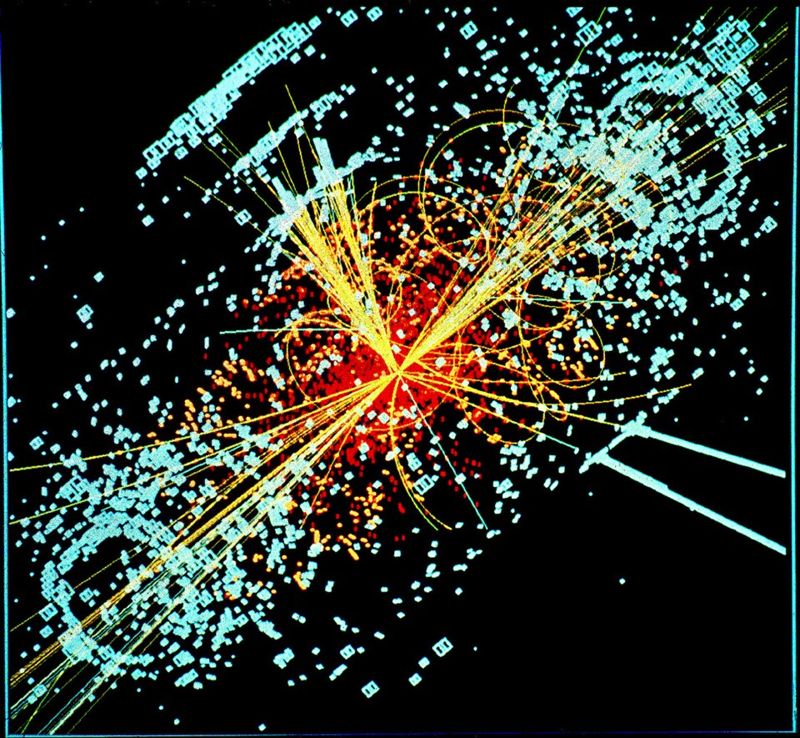
The Large Physics Model is a planned AI foundation model for collider physics that CERN, Europe’s particle physics laboratory, and the French AI company Mistral announced on October 15, 2026, when they signed a statement of intent for a long-term partnership. CERN describes it as the first foundation model for collider physics: a single pretrained model trained on billions of simulated proton-proton collisions at the Large Hadron Collider (LHC).
Today, LHC collisions are reconstructed by a chain of specialised algorithms that turn raw detector signals into particles. The new model is meant to learn across that whole chain and handle several jobs at once, including reconstructing collisions, identifying particles, flagging unexpected signals and evaluating designs for future detectors. CERN has stored about one exabyte (one million terabytes) of LHC data so far, and the number of collisions is expected to rise tenfold when the High-Luminosity LHC starts around 2030. Neither side has announced a timeline or budget for the model.
Source: CERN, “CERN and Mistral join forces to accelerate AI for science” (October 15, 2026).
Image: “CMS Higgs-event” by Lucas Taylor / CERN, CC BY-SA 3.0, via Wikimedia Commons.