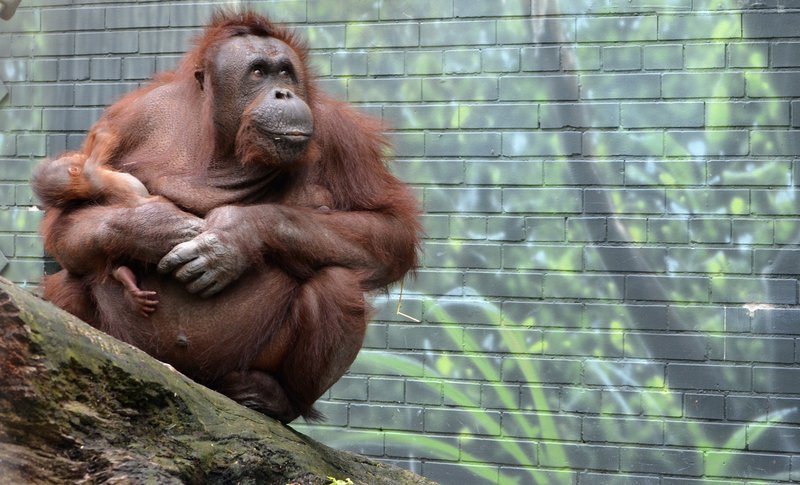
Yes, according to a 2026 study of wild Bornean orangutans. Researchers analyzed about 15 years and roughly 32,600 observation hours from 31 mother–offspring pairs and found that mothers whose infants were closer in age shared forest space more intensively, and those infants played together more often—even after accounting for relatedness and fruit availability.
On days when offspring played with peers, mothers traveled farther and spent less time feeding. Travel was also elevated on the days before and after play, with mothers moving toward play partners’ core areas beforehand and back toward their own afterward, suggesting the encounters are actively pursued rather than chance meetings.
Source: Jacobson et al., PNAS (2026).