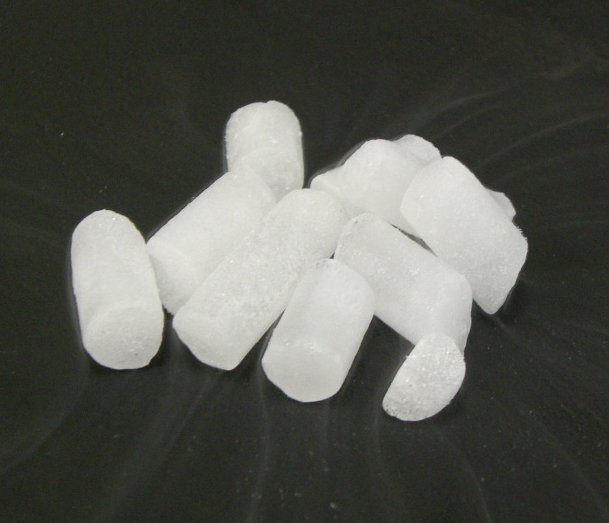
Dry ice is about −109.3 °F (−78.5 °C) at normal sea-level atmospheric pressure. It is solid carbon dioxide, and at that temperature it sublimates, turning straight from a solid into carbon dioxide gas without melting into a liquid.
Because it is so cold, touching dry ice with bare skin can cause frostbite-like cold burns within seconds, so it should be handled with insulated gloves or tongs and never sealed in an airtight container, since the gas it releases builds pressure (Compressed Gas Association).
Source: Compressed Gas Association: Safe Handling, Transport & Use of Dry Ice
Image: Dry ice pellets subliming, photo by Richard Wheeler (Zephyris), CC BY-SA 3.0, via Wikimedia Commons.