New evidence says yes. A University of Edinburgh and UK Dementia Research Institute study published in Nature Medicine examined people from the Lothian Birth Cohort 1936, whose thinking skills were tested between ages 70 and 82, and found that those whose cognition declined faster had fewer large nerve fibers and an abnormal buildup of unhealthy myelin. Their oligodendrocytes, the cells that make and maintain myelin, also had lower levels of the protective protein NRF2.
When researchers reduced NRF2 in the oligodendrocytes of mice, the animals developed excess myelin, lost large nerve fibers, and showed weaker cognitive gains as they aged. Because the NRF2 pathway is already targeted by a drug used to treat multiple sclerosis, the team suggests existing medicines might one day be tested against age-related cognitive decline, though that has not yet been shown.
Source: “Brain cells meant to protect us may be fueling cognitive decline,” ScienceDaily, from materials provided by the University of Edinburgh (October 2026); study: Craig et al., “Oligodendrocyte dysfunction in human age-related cognitive decline,” Nature Medicine 32(10): 3661 (2026), DOI 10.1038/s41591-026-04608-y.
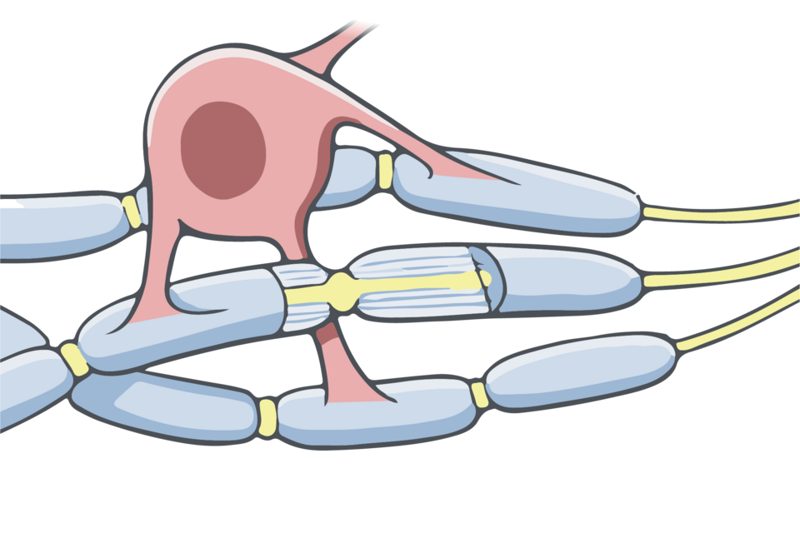
Image: Illustration of an oligodendrocyte wrapping myelin around nerve fibers. NIAID / Ryan Kissinger (NIH BioArt 397), public domain, via Wikimedia Commons.