
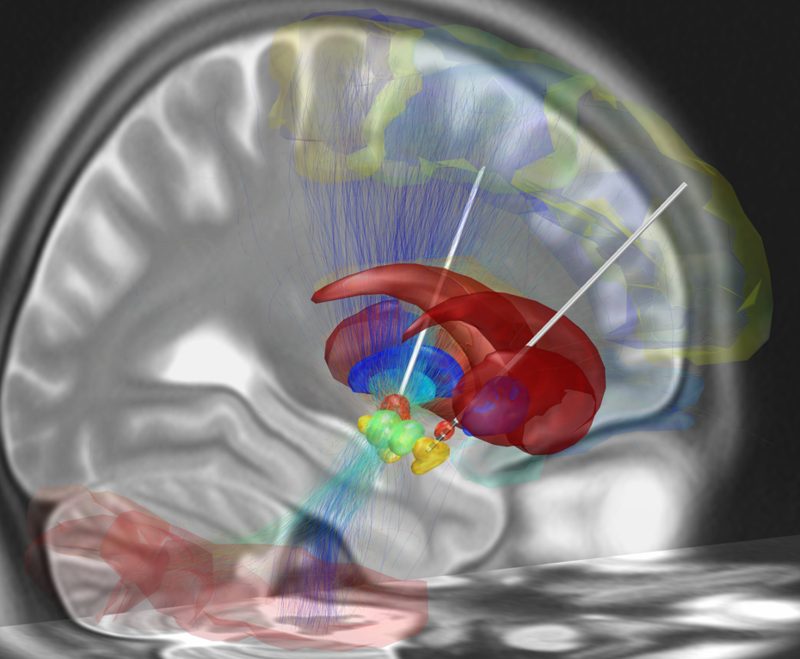
Three white matter pathways: the cingulum bundle, the forceps minor, and the medial uncinate fasciculus/ventral amygdalofugal pathways. A Mount Sinai-led study published October 1, 2026 in the American Journal of Psychiatry pooled patients from several independent groups, including the BROADEN trial and a University of Toronto cohort, who received subcallosal cingulate deep brain stimulation (SCC DBS) for treatment-resistant depression. Using models of each electrode’s electrical field and brain connectivity maps, the researchers found that lasting improvement consistently went with stimulation reaching all three pathways.
Patients who still had not improved after two years shared one pattern: the stimulation did not sufficiently engage the left cingulum bundle. The study did not test whether repositioning electrodes would help those patients, but the authors say it supports planning electrode placement from individual connectivity maps, an approach already used in the Abbott TRANSCEND trial.
Image: “Deep brain stimulation electrode placement reconstruction,” Andreashorn, CC BY-SA 4.0, via Wikimedia Commons.
Related answers