
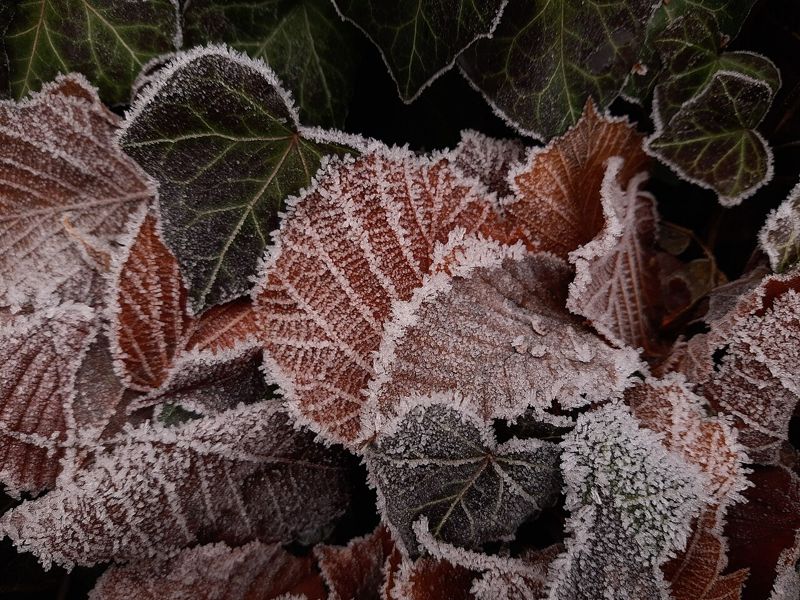
A hard freeze is when the surface air temperature falls to 28°F (about −2°C) or lower for an extended period of time, cold enough to kill most types of vegetation, according to the National Weather Service.
That lower threshold is what separates it from an ordinary freeze, which the Weather Service defines as a surface air temperature of 32°F or below over a widespread area for a climatologically significant period. A freeze does not require frost: the term is often used when wind or other conditions keep frost from forming. During the growing season, forecasters may describe a freeze as “killing” when it is expected to be cold enough, for long enough, to kill all but the hardiest herbaceous crops. Before these events, the Weather Service issues a freeze watch when significant, widespread freezing temperatures are possible but their timing or location is still uncertain. It issues a freeze warning during the growing season when temperatures are expected to drop below freezing over a large area for an extended period, whether or not frost develops.
Source: National Weather Service Glossary, “Hard Freeze” and National Weather Service Glossary, “Freeze,” “Freeze Watch,” and “Freeze Warning”
Image: Frosted leaves, Ehrenbach, by Gerda Arendt, CC0, via Wikimedia Commons.