
No. Most states must offer provisional ballots in federal elections, but Idaho, Minnesota and New Hampshire do not issue them at all, according to the National Conference of State Legislatures (NCSL).
The federal Help America Vote Act of 2002 requires election officials to offer a provisional ballot when a voter’s name is missing from the rolls, required ID isn’t available or their eligibility is otherwise in question. The voter signs a written affirmation at the polling place, and the ballot is kept separate until officials decide after the election whether it counts. The law exempts six states that offered same-day voter registration when the National Voter Registration Act passed in 1993: Idaho, Minnesota, New Hampshire, North Dakota, Wisconsin and Wyoming. North Dakota has no voter registration at all. The three exempt states that still use provisional ballots do so in narrow cases. North Dakota uses them when polling hours are extended, Wisconsin uses them for same-day registrants who lack required ID, and Wyoming uses them for unregistered voters without proper ID, challenged voters or extended hours. Common reasons a provisional ballot is rejected include not being registered, voting in the wrong precinct or jurisdiction, and missing ID or signatures.
Source: National Conference of State Legislatures, “Provisional Ballots”
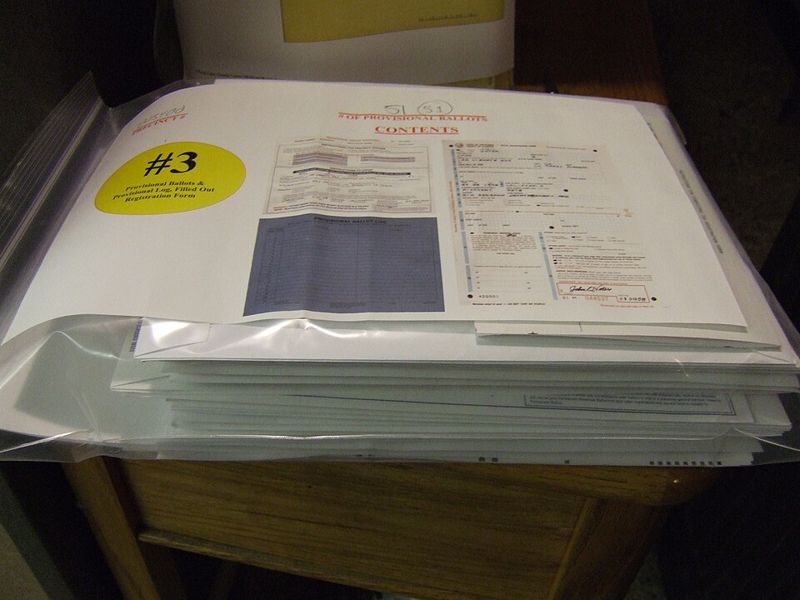
Image: Bag of 51 provisional ballots, by Joe Hall, CC BY 2.0, via Wikimedia Commons.