
Yes. U.S. federal food rules allow methylene chloride to be used as a solvent to extract caffeine from green coffee beans, as long as the residue left in the coffee does not exceed 10 parts per million, or 0.001 percent.
The rule is 21 CFR 173.255, part of the FDA regulations on secondary direct food additives. The 10 ppm ceiling applies to decaffeinated roasted coffee and to decaffeinated soluble coffee extract, better known as instant coffee. Decaffeination happens before roasting, while the beans are still green, and the limit governs how much solvent may remain afterward rather than banning its use. The same section sets different limits for two other foods. Spice oleoresins may carry up to 30 ppm of methylene chloride residue from spice extraction, and that 30 ppm cap covers the total of all chlorinated solvent residues if others are present. Hops extract may contain up to 2.2 percent, but only if it is added to the wort before or during cooking in beer-making and its label discloses the methylene chloride and that restricted use.
Source: eCFR, 21 CFR 173.255 Methylene chloride
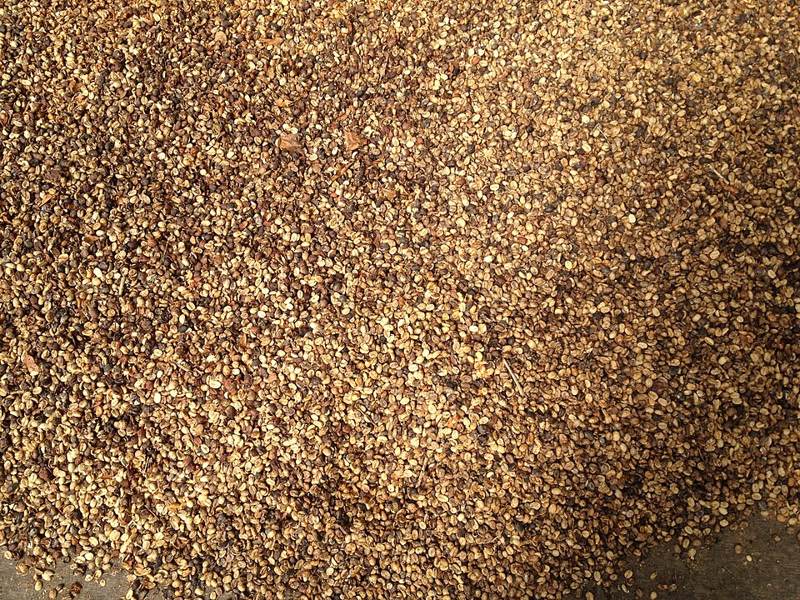
Image: Green Kona coffee beans by Bnummer, CC BY-SA 4.0, via Wikimedia Commons.