
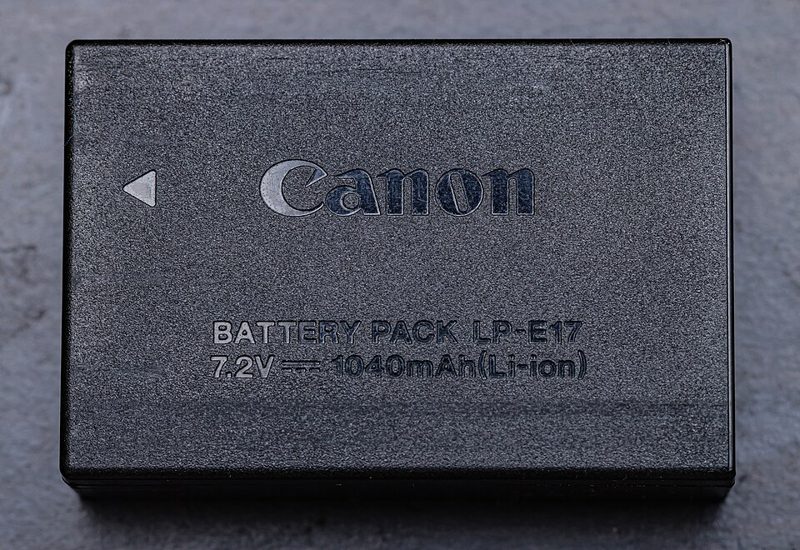
To convert mAh to Wh, divide the milliamp-hour rating by 1,000 to get amp-hours, then multiply by the battery’s nominal voltage: Wh = (mAh ÷ 1,000) × V.
For example, the camera battery pictured is rated 7.2 volts and 1,040 mAh, so it holds about 1.04 × 7.2 = 7.5 Wh. A 3.7-volt battery rated 4,400 mAh works out to 4.4 × 3.7, or about 16.3 Wh. Watt-hours are the better way to compare batteries because they include voltage, while mAh alone ignores it. Wiring cells in series raises the voltage without changing the amp-hour capacity, and wiring them in parallel raises the amp-hours while the voltage stays the same. Airlines regulate lithium-ion batteries by their watt-hour rating, and IATA notes that most consumer lithium-ion batteries are below 100 Wh. Most lithium-ion batteries made since 2009 must also be marked with their Wh rating on the case, so check the label before doing the math.
Source: IATA, Lithium Battery Guidance Document (2026), section A.04
Image: Canon LP-E17 battery pack by Dinkun Chen, CC BY-SA 4.0, via Wikimedia Commons.