
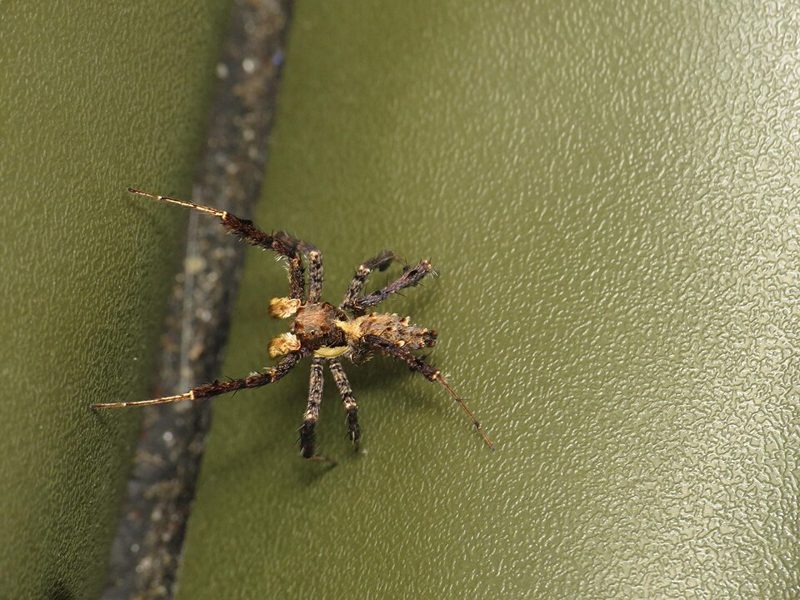
Yes. A study published in October 2026 found that the Australian jumping spider Portia fimbriata shows true, regulated sleep with two distinct stages, including a REM-like state marked by eye movements and muscle twitches.
Researchers at the University of Bonn’s Institute of Organismic Biology filmed the spiders in high resolution over several days and nights, using infrared cameras at night to record sleep positions, resting phases and the REM-like episodes. Because spider brain activity could not be measured, the team relied on behavior: they used a sound stimulus to check whether resting spiders reacted more slowly, and they tested for “sleep rebound,” where an animal makes up for lost sleep after being disturbed. The authors describe it as the first comprehensive confirmation of sleep behavior in a spider; until now, experimental evidence for true sleep in spiders was lacking. Portia species hunt other spiders and are known for complex hunting tactics, which makes them a useful model for linking sleep and learning. The findings, published in the Proceedings of the National Academy of Sciences, suggest REM-like sleep may be more widespread in the animal kingdom than once thought.
Image: Portia fimbriata by Donald Hobern, CC BY 2.0, via Wikimedia Commons.