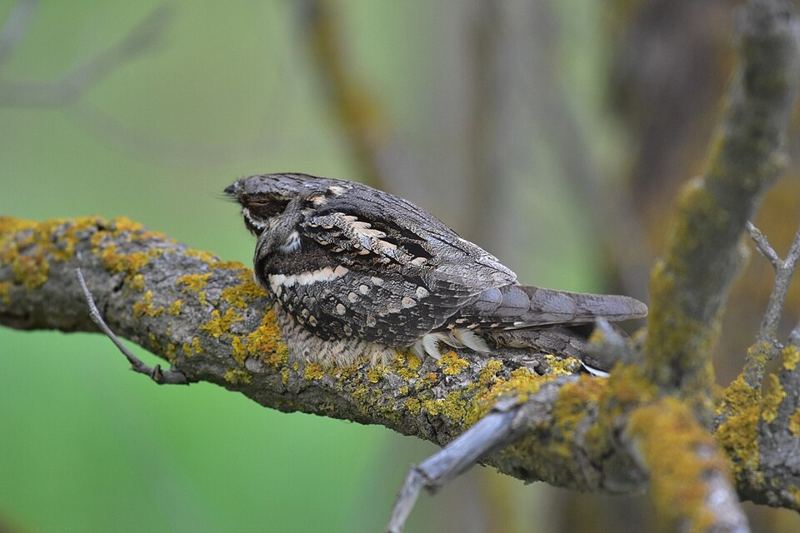
Not entirely. The European nightjar (Caprimulgus europaeus) migrates every year between Europe and southern Africa, but wind-tunnel experiments by Lund University researchers, published in PLOS Biology, found that its broad wing tips make it less efficient at generating lift at higher cruising speeds. The same wing shape helps the bird fly slowly, hover, and turn sharply while it hunts insects at night, so its wings are a compromise between migration and agility rather than a design optimized for long-distance flight.
The study also found that nightjars keep producing forward thrust during the upstroke of each wingbeat, a technique previously associated mainly with bats and insects. The researchers link this to the limited amount the nightjar can fold its wings during each beat.
Source: “This bird flies thousands of miles, but its wings have a catch,” ScienceDaily, from materials provided by Lund University (October 2026); study: Johansson, Norevik, Friman and Hedenström, “Nightjars trade off cruising speed efficiency for hovering capabilities and link upstroke thrust production with restricted wing folding,” PLOS Biology 24(9): e3004023, DOI 10.1371/journal.pbio.3004023.
Image: European nightjar perched on a branch. Photo by Александр Чегодаев (tcager), CC0, via Wikimedia Commons.