Mostly yes, especially when the leak’s approximate location is already known. In a year-long, single-blind test published in Nature on October 14, 2026, researchers made 481 metered methane releases (9.5 to about 1,184 kg per hour) plus 265 blank controls in Arizona, timed to overpasses by 12 government, commercial and non-profit satellites, and 15 analysis teams from nine countries submitted more than 2,250 estimates.
Satellites built specifically to measure methane detected 92–100% of releases with 0–11% false positives and estimated emission rates with about 44% mean absolute error. Instruments repurposed for methane caught 62–88% of releases, broad land-imaging satellites detected poorly at the tested rates, AI-based methods produced 79% of all false positives, and cloud cover above 20% degraded results across systems.
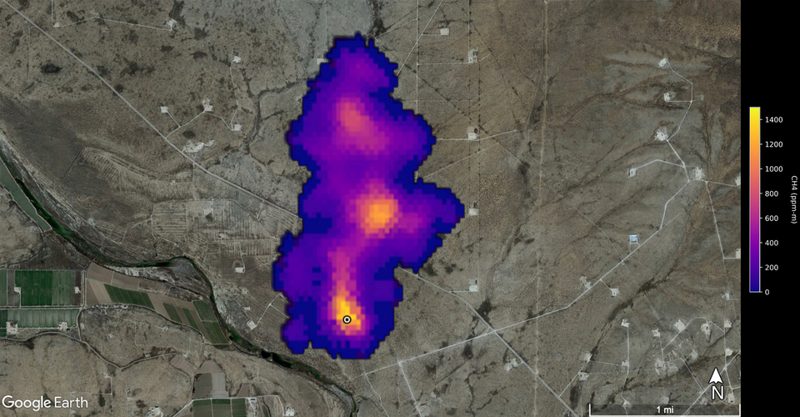
Image: Methane plume southeast of Carlsbad, New Mexico, detected by NASA’s EMIT instrument. NASA Scientific Visualization Studio, public domain, via Wikimedia Commons.