Are lions herbivores or omnivores?
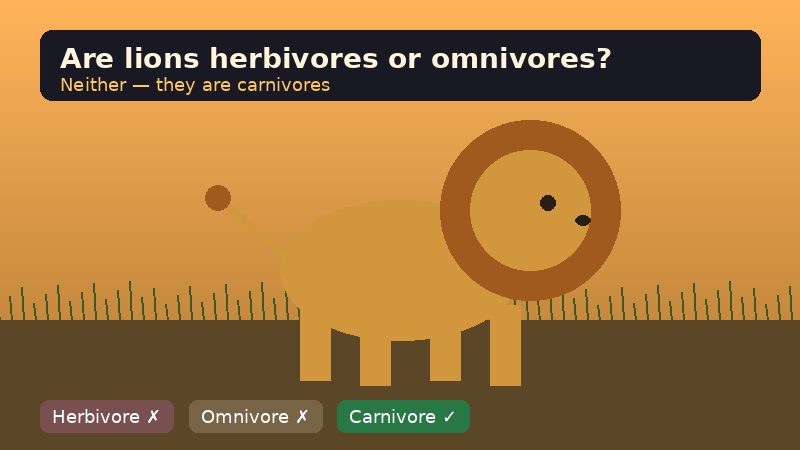
Lions are neither herbivores nor omnivores; they are carnivores that depend on meat.
Add a custom archive category description here.
Lions are neither herbivores nor omnivores; they are carnivores that depend on meat.
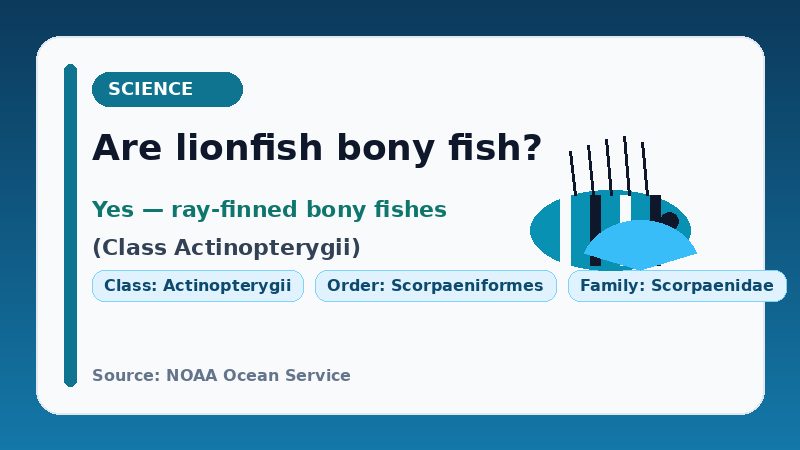
Yes. NOAA places lionfish in class Actinopterygii (ray-finned fishes), the bony-fish group, not among cartilaginous fishes such as sharks.
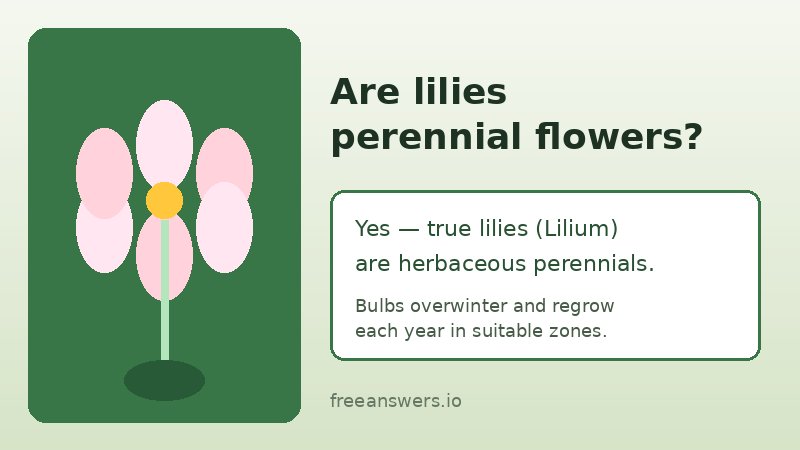
Yes. True lilies (Lilium) are herbaceous perennial flowers that grow from bulbs and return each year in suitable climates.
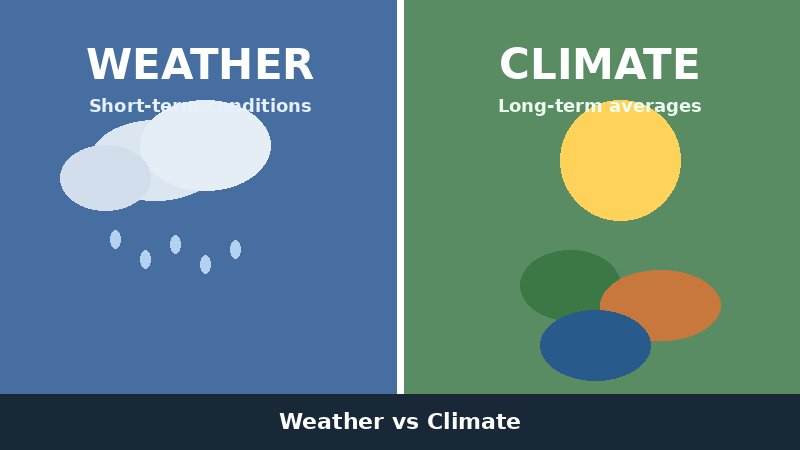
Weather is short-term atmospheric conditions; climate is the long-term average of weather, usually over 30 years or more.
Some lichen species are toxic; the U.S. Forest Service warns that not all lichens are edible and cites wolf lichen and ground lichen as poisonous examples.
Komodo dragons are carnivores that eat meat and carrion, not plants—so they are not omnivores.

No. Koalas are specialized herbivores (folivores) that eat eucalypt leaves, flowers, and stems — not an omnivorous diet.

Yes. NOAA lists killer whales at up to 32 feet and 11 tons, versus white sharks at about 21 feet and up to about 4,500 pounds.

Intraductal papillomas are usually not painful, but some people have localized breast discomfort or a nipple-area lump that may hurt.

Browns are carbon-rich compost materials (dry leaves, cardboard); greens are nitrogen-rich (food scraps, grass). EPA recommends about 2–3 parts browns to 1 part greens by volume.