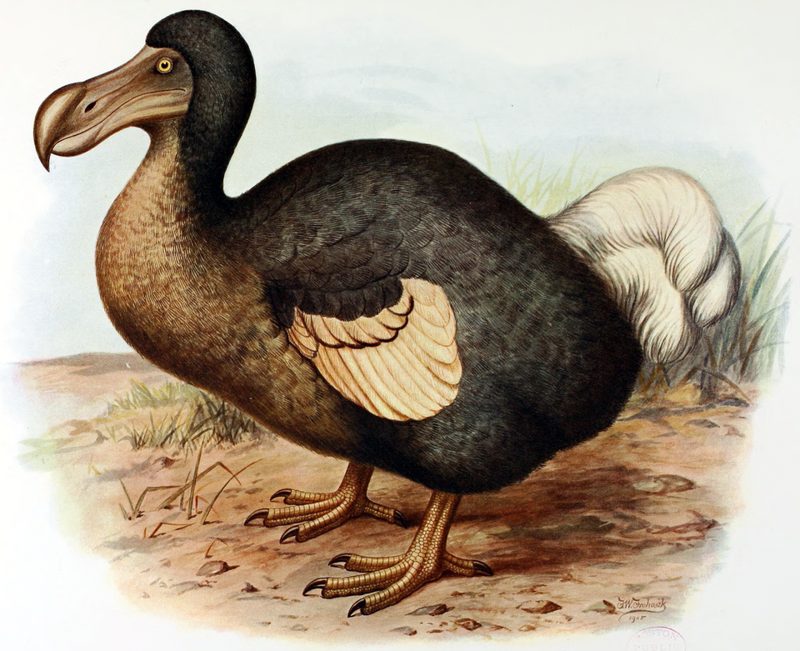
Colossal Biosciences has not brought back the dodo, and it has not given a date for hatching a dodo-like bird. In an update on October 14, 2026, the Dallas company said its new AI tool, GenoMorph, had narrowed the search to about 2,300 candidate stretches of regulatory DNA linked to bird beak shape: 653 tied to beak size and 1,698 tied to beak thickness and breadth. Colossal says these are only priorities for lab testing and do not yet prove that any of them caused the dodo’s distinctive head and beak.
The company also reported that its dodo genome now has 95% of its DNA letters covered by at least five independent ancient DNA fragments (65-fold coverage on average), with a genome paper still headed for peer review. Its plan is to make edits in the Nicobar pigeon, the dodo’s closest living relative; it now keeps 36 of those pigeons in Texas and has grown their primordial germ cells, the cells that become sperm and eggs, which are needed to pass edits to future generations.
Image: dodo illustration by Frederick William Frohawk (1905), public domain, via Wikimedia Commons.