
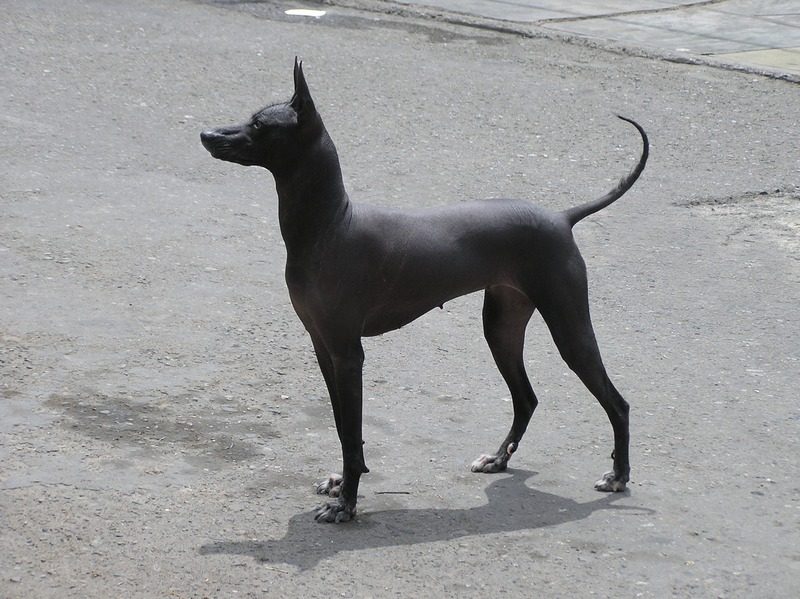
Archaeologists studying Castillo de Huarmey, a Wari Empire administrative and burial center on Peru’s northern coast (occupied about 600–1050 CE), identified naturally mummified dog remains as Peruvian hairless dogs by two clues: the animals had no fur, and their first premolars had never erupted. The same gene that causes hairlessness in dogs also reduces the number of teeth, so the missing teeth pointed to the hairless breed rather than other ancient dogs.
Radiocarbon dating showed the nearly complete mummified male dog is at least 1,200 years old, the oldest dated specimen from the site so far. The study, led by Weronika Tomczyk of Dartmouth College and published in the Journal of Anthropological Archaeology, counted 341 dog bone specimens from at least 19 dogs. Isotope analysis showed most dogs ate some maize, and hairless puppies had diets similar to human children, which may hint at organized breeding.
Image: Peruvian Hairless Dog, by Yuri Hooker, CC BY-SA 3.0, via Wikimedia Commons.
Related answers