Subduction zone volcanoes form where two tectonic plates converge and the denser oceanic plate sinks beneath the other plate into the mantle. As the descending slab reaches depths of roughly 80 to 160 kilometers (50 to 100 miles), heat and pressure drive water and other fluids out of its rocks and sediments. Those fluids lower the melting point of the hot mantle rock above, causing partial melting that produces magma.
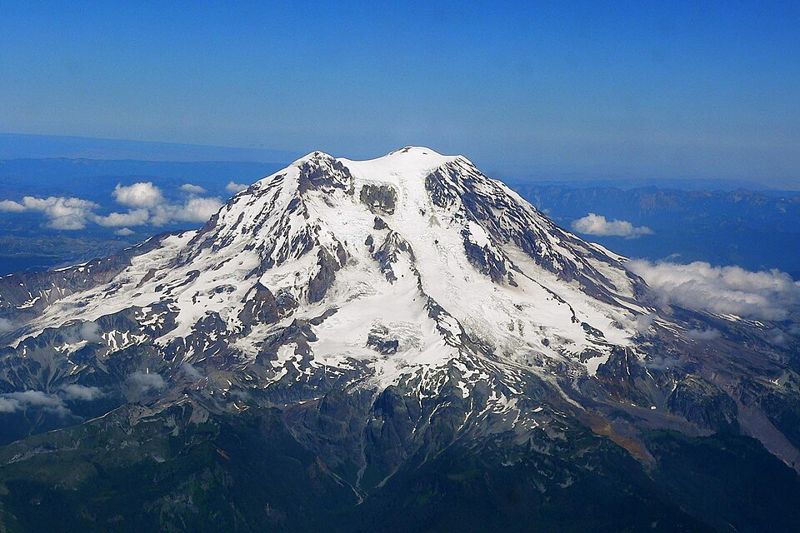
Because the magma is less dense than the surrounding rock, it rises, picking up silica as it melts its way through the crust. The thick, gas-rich, silica-rich magma tends to build tall, steep-sided volcanoes that can erupt explosively, and they line up in curved chains called volcanic arcs, such as the Cascade Range (Mount Rainier, Mount St. Helens) and the Aleutian Islands along the Pacific Ring of Fire.
Source: Volcano World, Oregon State University: Subduction Zone Volcanism
Image: Mount Rainier from the west by Stan Shebs, CC BY-SA 3.0, via Wikimedia Commons.