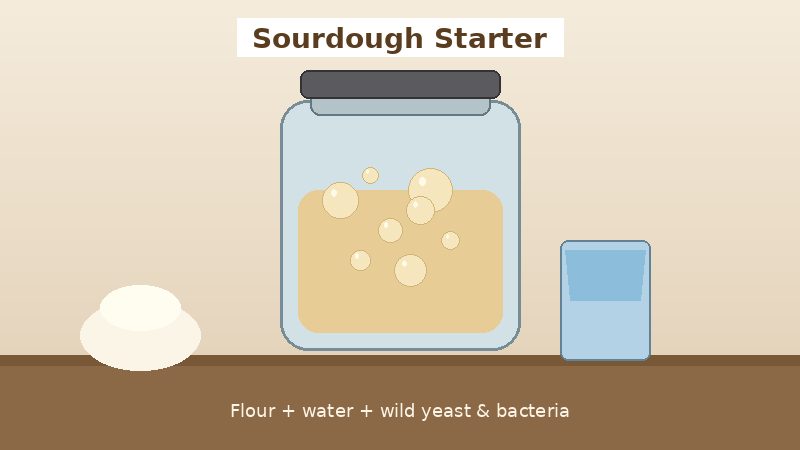
A sourdough starter is a living culture of flour and water colonized by wild yeast and lactic-acid bacteria. The yeast ferments sugars in the flour and releases carbon dioxide bubbles that make bread rise, while the bacteria produce lactic and acetic acids that create sourdough’s tangy flavor.
Regular feedings of fresh flour and water keep those microbes active so the starter stays bubbly and strong enough to leaven dough without commercial yeast. Temperature and hydration affect how fast it rises and how sour it tastes.