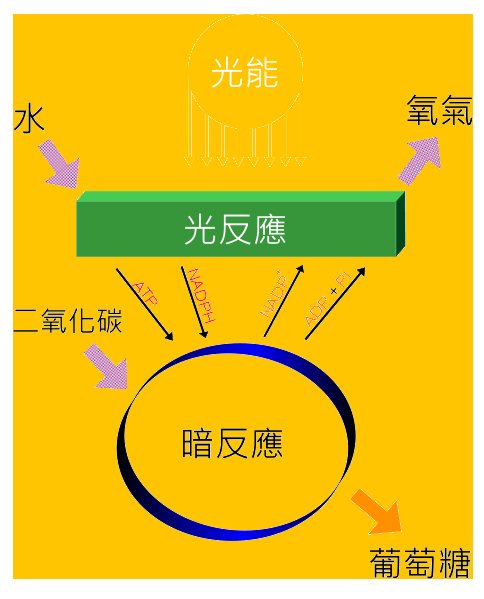
Photosynthesis is how plants, algae, and cyanobacteria turn sunlight, carbon dioxide, and water into energy-storing carbohydrates, releasing oxygen as a byproduct. In plant cells the work happens inside chloroplasts: chlorophyll in the thylakoid membranes absorbs light, and that energy is stored temporarily as ATP and NADPH.
Those energy carriers then power the light-independent reactions (the Calvin cycle) in the chloroplast stroma, where carbon dioxide is assembled into sugars such as glucose. Because those sugars feed nearly every food chain, photosynthesis powers most of Earth’s ecosystems.
Source: OpenStax Biology 2e, Section 8.1 Overview of Photosynthesis
Image: Overview of photosynthesis. Diagram by Mike8411251995, public domain, via Wikimedia Commons.