
Ripple-65B Preview is Ricursive Intelligence’s first open-weight model: a 65B-parameter dense Transformer under Apache 2.0 with a 1,048,576-token context window. The company reports 80.52 on Terminal-Bench 2.1, ships BF16, NVFP4 and DFlash2 draft checkpoints, and OpenRouter lists it at $0.20 input and $0.60 output per million tokens.
Last updated: November 9, 2026
Table of contents
- What Ripple-65B Preview is
- The four checkpoints
- Benchmarks against larger open models
- How to run it yourself
- Using it through an API
- Limits and caveats
- Frequently asked questions
- Sources
What Ripple-65B Preview is
Ricursive Intelligence describes itself as a full-stack AI lab working on chip design. According to its launch post, it trained a language model from scratch to power that platform, and Ripple-65B Preview is a general-purpose variant of the proprietary model.
The Hugging Face model card lists the main design choices:
- Dense, not mixture-of-experts. All 65B parameters are active on every token. The company says it chose this to keep training and serving infrastructure simple.
- Thin and deep. 80 layers with a narrow model width (d_model 5120), extra attention heads, more sliding-window layers per global layer, gated attention, global NoPE and value residuals.
- 12 trillion training tokens of text-only, mostly English and code data, followed by midtraining, long-context training, SFT and reinforcement learning focused on agentic coding.
- Context of 1Mi tokens (1,048,576), with the checkpoint supporting up to 2Mi positions according to the serving notes.
The blog puts the full research and development cost at $32 million, which Ricursive estimates as about one-tenth the cost of the previous open-weight leader in agentic coding. That figure is the company’s own estimate.
The four checkpoints
The release is a family of repositories rather than a single file. Pick the one that matches your hardware and goal.
| Repository | What it contains | Best for |
|---|---|---|
| Ripple-65B-Preview | Instruction-tuned model in BF16, 16 safetensors shards | Full-precision serving on datacenter GPUs |
| Ripple-65B-Preview-NVFP4 | Experimental quantization: NVFP4 for MLP layers, attention kept in BF16 | Smaller memory footprint and local hardware |
| Ripple-65B-Base-Preview | Pretrain-only BF16 base model, no midtraining or synthetic QA data | Fine-tuning and research |
| Ripple-65B-Preview-DFlash2 | 4.04B-parameter BF16 draft model for speculative decoding | Faster generation alongside the BF16 or NVFP4 target |
The DFlash2 card explains that the drafter proposes blocks of 16 tokens from Ripple’s hidden states, and the target model verifies them. With correct rejection sampling, the output distribution matches the target model. The drafter cannot generate text on its own.
Benchmarks against larger open models
Ricursive compares Ripple against US open-weight models with far more total parameters. All numbers below are self-reported on the model card, at BF16 with maximum effort. Some competitor scores come from Ricursive’s in-house evaluations where official figures were missing.
| Benchmark | Ripple-65B Preview | Reflection Beam 501B | Muse Spark Open 816B | Inkling 975B |
|---|---|---|---|---|
| Terminal-Bench 2.1 (self-reported) | 80.5 | 80.1 | 76.4 | 63.8 |
| SWE-bench Verified | 76.5 | 81.6 | 78.7 | 77.6 |
| SWE-bench Pro v2.0 Hard | 79.1 | 76.5 | 72.4 | 39.6 |
| GPQA Diamond | 85.2 | 90.6 | 89.0 | 87.2 |
| MCP Atlas | 71.67 | 80.8 | 89.2 | 76.0 |
The pattern is clear: Ripple leads on terminal-style agentic coding and is competitive on SWE-bench, while larger models lead on knowledge, science and tool-use benchmarks such as MCP Atlas. The card also notes that agentic benchmark scores are hard to replicate and shift with the harness used. For background on two of the comparison models, see our guides to Meta Muse Spark Open and Thinking Machines Inkling 2 Small.
How to run it yourself
The repository ships a reference server in inference/server. The serving README targets BF16 Ripple plus the DFlash2 drafter on two NVIDIA B200 GPUs with SGLang 0.5.19.
- Prepare a Linux machine with CUDA Toolkit 13, a C++ compiler and the uv package manager.
- Download the full BF16 target checkpoint and the matching DFlash2 draft checkpoint from Hugging Face. Keep the repository layout, because both inference folders share chat_template.jinja at the root.
- From inference/server, set CUDA_HOME, then run
CUDA_VISIBLE_DEVICES=0,1 uv run --script serve.py --model-path /path/to/target --speculative-draft-model-path /path/to/draft. Dependencies install automatically. - Send OpenAI-style requests to
http://127.0.0.1:30000/v1/chat/completionswith the model name ripple. - For four GPUs, start a second copy on GPUs 2 and 3 with
--port 30001. The README suggests eight concurrent requests per replica.
Defaults are tensor parallelism of 2, BF16 weights and KV cache, 16 draft tokens and a 1Mi-token target context. The drafter keeps a 16Ki-token attention window, and smaller windows are refused. If you already run your own SGLang stack, the DFlash2 card lists the speculative decoding flags to add. Our vLLM 0.32 guide covers a different open-source serving engine.
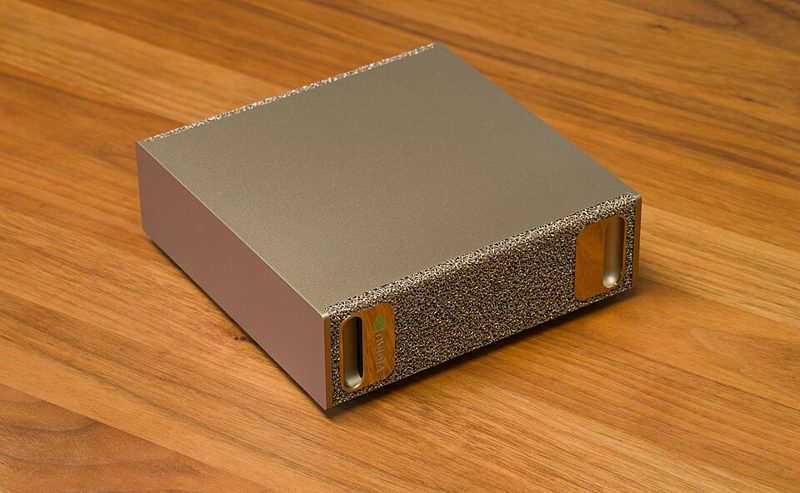
Ricursive reports 250 tokens per second on two B200 GPUs at batch size 8, before quantization or custom kernels. On the local side, the company says the model fits on an NVIDIA DGX Spark and offers the NVFP4 checkpoint and a Colab notebook to get started.
Using it through an API
If you do not want to host it, the launch post says Ripple-65B Preview is available on Together AI, GMI Cloud, OpenRouter and Fireworks. The OpenRouter model page lists the ID ricursiveai/ripple-65b-preview with a 1,048,576-token context and these prices per million tokens: $0.20 input, $0.60 output and $0.05 for cached input reads. Supported parameters include tools, tool_choice, response_format, seed, temperature, top_p and logprobs.
A few practical patterns from the serving notes apply to any host:
- Responses split reasoning into reasoning_content and the final answer into content, so budget max_tokens for both.
- Pass tools with tool_choice set to auto. Your application runs the function, then appends the assistant message unchanged plus a tool message with the tool_call_id.
- For forced calls, use strict function schemas with additionalProperties set to false. Non-strict required calls produced extra argument fields in Ricursive’s validation.
For routing between several coding models on one key, see our guide to OpenRouter Auto Code, and for low-latency hosting options, our Fireworks Ultra-fast guide.
Limits and caveats
- It is a preview. Ricursive says post-training was relatively light and focused on agentic coding, so expect weaker results on general knowledge than larger models.
- Text only. Pretraining data was text and code, and the card does not describe image input.
- No reasoning controls. The chat template has no thinking switch and no effort levels.
- Runtime support. The DFlash2 drafter needs a runtime that supports Ripple and DFlash2DraftModel. The recorded validation used the ripple-sglang runtime on eight H100 GPUs, which does not establish compatibility with other versions.
Frequently asked questions
What is Ripple-65B Preview?
It is an open-weight language model from Ricursive Intelligence. It is a 65B-parameter dense Transformer pretrained from scratch on 12 trillion tokens, released under the Apache 2.0 license, with support for up to 1,048,576 tokens of context.
How much does Ripple-65B Preview cost through an API?
OpenRouter lists ricursiveai/ripple-65b-preview at $0.20 per million input tokens, $0.60 per million output tokens and $0.05 per million cached input tokens. The weights themselves are free to download from Hugging Face.
Can Ripple-65B Preview run on a DGX Spark?
Ricursive says the model’s 65B size lets it fit on consumer hardware such as the NVIDIA DGX Spark, and it publishes an NVFP4 checkpoint to help with local use. The reference server in the repository targets two NVIDIA B200 GPUs instead.
Does Ripple-65B Preview support tool calling?
Yes. The reference SGLang server enables Ripple’s tool-call and reasoning parsers, accepts OpenAI-style tools and tool_choice, and returns structured tool_calls. For tool_choice set to required, the docs advise strict function schemas with additionalProperties set to false.
Can I turn off reasoning or set an effort level?
No. The serving README says the chat template does not implement a thinking on or off switch or reasoning-effort levels. Reasoning arrives in reasoning_content, so leave enough max_tokens for both the reasoning and the final answer.
Sources
- Ripple-65B Preview model card on Hugging Face
- Ricursive Intelligence launch post: Introducing Ripple-65B Preview
- Ripple reference server README (SGLang on B200)
- Ripple-65B Preview DFlash2 model card
- Ripple 65B Preview on OpenRouter
Image: NVIDIA DGX Spark, photo by Daniel Lu (Wikimedia Commons), licensed CC BY-SA 4.0, resized. FreeAnswers is not affiliated with Ricursive Intelligence or NVIDIA.
