Most archaea do not have a peptidoglycan (murein) cell wall like bacteria. Their most common cell wall is an S-layer: a single, crystal-like sheet of protein or glycoprotein subunits that coats the outside of the cell membrane.
A 2014 review in Frontiers in Microbiology describes several exceptions. Some methanogens such as Methanothermus and Methanopyrus have pseudomurein (pseudopeptidoglycan), which resembles bacterial peptidoglycan but is chemically different; Methanosarcina can make methanochondroitin; and some salt-loving archaea use glutaminylglycan or proteoglycan-like S-layers. A few archaea, such as Thermoplasma and Ferroplasma, have no cell wall at all.
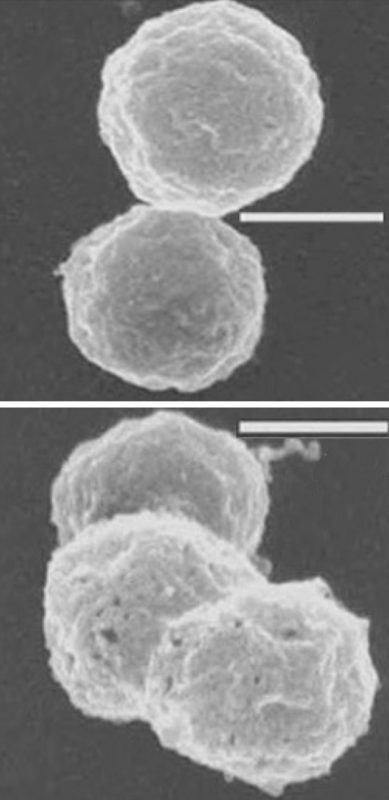
Image: Halobacterium salinarum NRC-1 cells (scanning electron micrographs), Helga Stan-Lotter and Sergiu Fendrihan, CC BY 4.0, via Wikimedia Commons.