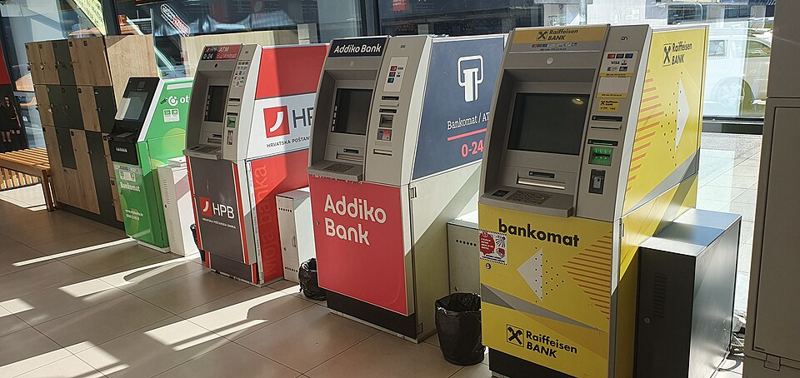
An ATM network, also called an interbank network or ATM consortium, is a shared computer network that lets a debit or ATM card issued by one member bank work at ATMs owned by other member banks. The network routes the transaction back to the cardholder’s bank for approval, which is why you can withdraw cash from a machine that does not belong to your own bank, often for an extra fee.
Some networks are global, such as Visa’s Plus and Mastercard’s Cirrus, which is why travelers can usually get local cash abroad. Others are national or regional. In the United States, examples include STAR, NYCE, and Pulse, plus Allpoint and MoneyPass, two networks founded in 2003 that are known for surcharge-free withdrawals at participating machines. Many networks also let the same card be used as a debit card at stores.
Source: Wikipedia: Interbank network
Image: ATMs of several banks in Croatia, by Gewild, CC0, via Wikimedia Commons.